Table of Contents
- What Are Coffee Subscription Services for Home Brewers?
- Coffee Subscription Services Compared: Quick Overview
- Freshly Roasted Coffee Beans Delivered: What to Expect
- How to Store Coffee Beans for Maximum Freshness
- Best Grind Size for Home Brewing Methods
- Choosing the Right Subscription for Your Needs
- Why Ethical Sourcing Matters in Your Coffee Subscription
- Conclusion
- Frequently Asked Questions
Last Updated: October 4, 2026
What Are Coffee Subscription Services for Home Brewers?
Coffee subscription services for home brewers deliver freshly roasted specialty beans directly to your door on a regular schedule. Rather than buying whatever's available at the supermarket, you receive carefully selected single-origin or blended coffees tailored to your brewing method and flavour preferences. At Kiboko Coffee Co, we offer freshly roasted, ethically sourced beans for home brewing.

The fundamental difference between subscription coffee and high street bags is freshness. Most commercial coffee sits in warehouses or on shelves for weeks or months before reaching you. Subscription services roast throughout the week and ship within days, meaning your beans arrive at peak flavour. This matters more than you'd think. The volatile compounds that create coffee's complexity degrade quickly after roasting, so timing is everything.
A typical subscription works like this: you select your preferences (roast level, origin, grind size), choose a frequency (weekly, fortnightly, monthly), and the service handles the rest. You pay upfront for each shipment or commit to a recurring charge. The best services offer flexibility to skip deliveries, adjust quantities, or swap beans without penalty. Many also donate a portion of proceeds to coffee-growing communities, which appeals to ethically conscious brewers who want their morning ritual to mean something beyond caffeine.
Coffee Subscription Services Compared: Quick Overview
Choosing a coffee subscription service depends on what matters most to you: budget, freshness, ethical sourcing, grind flexibility, or specialty origins. Here's how Kiboko Coffee Co's offerings stack up against what home brewers typically need.
| Service | Starting Price | Grind Options | Ethical Focus | Best For |
|---|---|---|---|---|
| Kiboko Coffee Co | £19.49-£27.99 (bundles) | 4 sizes + whole bean | Farm Africa donation (£1/kg) | Ethically conscious home brewers seeking fresh, single-origin beans |
| Budget starter bundle | £19.49 | Limited | Varies | Cost-conscious beginners testing specialty coffee |
| Premium single origins | £27.99 | Full range | Yes | Experienced brewers wanting traceable, high-quality beans |
| Equipment bundles | £24.99-£44.99 | Custom grind | Yes | New home brewers needing brewing equipment plus coffee |
The key insight: you're not just paying for coffee, you're paying for freshness, traceability, and the convenience of curated selections arriving on schedule. Budget options exist, but they often compromise on one of these three pillars.
Freshly Roasted Coffee Beans Delivered: What to Expect
When your Kiboko Coffee Co order arrives, the beans will have been roasted within the past week. This is radically different from buying bags that may have been roasted months ago.
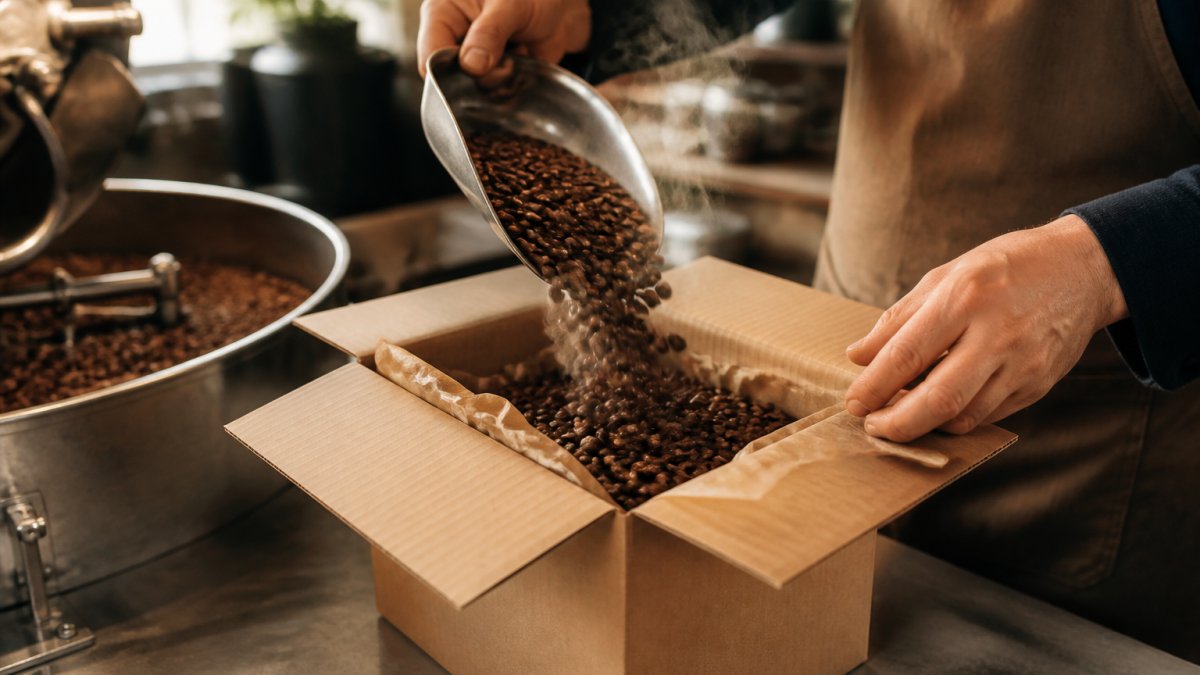
Expect your beans to arrive in sealed kraft paper bags with a one-way valve that lets CO₂ escape without letting oxygen in. This packaging protects the beans during transit and for the first week at home. The bag will be labelled with the roast date, origin details, tasting notes, and recommended brewing methods.
The flavour profile peaks 3-5 days after roasting, once the beans have fully degassed. Don't brew immediately, wait a few days for best results. After that window, the coffee remains good for 2-3 weeks if stored properly, though flavour gradually fades.
Many home brewers are surprised by how much brighter and more nuanced freshly roasted coffee tastes compared to supermarket alternatives. Single-origin beans reveal distinct characteristics, Ethiopian coffees often show floral or berry notes, Brazilian beans tend toward chocolate and caramel, Central American origins sit somewhere in between.

How to Store Coffee Beans for Maximum Freshness
The enemy of freshness is exposure: to oxygen, light, heat, and moisture. Your beans degrade fastest when exposed to any combination of these. Proper storage extends the flavour window significantly.
Store beans in an airtight container away from direct sunlight. Glass jars with rubber seals work well, as do dedicated coffee canisters with one-way valves. Keep the container in a cool cupboard, not on a sunny windowsill or above the oven. Room temperature (around 18-21°C) is ideal. A dark corner of a kitchen cupboard is perfect.
The sealed kraft bags your Kiboko Coffee Co beans arrive in are actually excellent storage containers on their own. The one-way valve allows CO₂ to escape without letting oxygen in. Fold the top down, seal it with a clip or rubber band, and store the bag upright in your cupboard. This is simpler than transferring to another container and works just as well.
Once opened, consume the beans within 2-3 weeks for optimal flavour. After that, they're still drinkable but noticeably flatter. Whole beans last longer than pre-ground coffee because grinding dramatically increases surface area, accelerating oxidation. If you must grind in advance, use the beans within a few days.
Freezing is tempting but counterproductive. When you remove frozen beans, condensation forms on the surface, introducing moisture that damages flavour. The temperature swing also causes the beans to crack internally. Room-temperature storage always outperforms freezing.
Best Grind Size for Home Brewing Methods
Grind size is arguably more important than bean quality for consistent results at home. The wrong grind can ruin excellent coffee, while the right grind can elevate ordinary beans.
The basic principle: finer grinds expose more surface area to water, extracting faster and stronger. Coarser grinds extract slower and lighter. Matching grind to your brewing method ensures proper extraction time and flavour balance.
Coarse grind (like breadcrumbs) works for French press and cold brew. These methods use immersion, meaning the grounds sit in contact with water for minutes or hours. Coarse particles slow extraction, preventing over-extraction and bitterness.
Medium grind (like sand) suits pour-over methods: Chemex, V60, Melitta. These brewers rely on water flowing through a filter bed, and medium grind provides the right resistance for proper contact time without clogging the filter.
Medium-fine grind (slightly finer than sand) works for AeroPress and Moka pot. These hybrid methods combine immersion and pressure, requiring a balance between extraction speed and flavour complexity.
Usiku + Shujaa Bundle (250g) →
Fine grind (like espresso powder) is essential for espresso machines and Turkish coffee. Espresso forces hot water through grounds under pressure in seconds, so fine particles ensure complete extraction in that brief window.
Whole bean gives you maximum flexibility. If you own multiple brewers, grinding fresh for each method is ideal. A basic burr grinder costs £20-40 and pays for itself in flavour improvement within weeks.
Choosing the Right Subscription for Your Needs
The right subscription depends on how you actually brew coffee and what you value most. Here's how to think through the decision.
If you're transitioning from capsules or instant coffee: Start with Kiboko Coffee Co's Usiku + Shujaa Bundle (£19.49). It includes two contrasting coffees, a dark blend for morning and a more delicate single-origin for afternoon, so you experience the difference freshness makes without committing to a full subscription.
If you're an experienced home brewer wanting single-origins: The African Bundle (£27.99) or Central American Bundle (£27.99) give you three distinct origins to explore. These showcase how terroir, the soil, altitude, and climate where coffee grows, shapes flavour. Kiboko supports sustainable agriculture with every purchase.
If you drink decaf in the evenings: The Decaf Bundle (£19.49) offers two quality decaf options processed using the Swiss Water method, which removes caffeine without chemicals. Many decaf coffees taste flat; these don't. The Brazil Cerrado shows notes of dark chocolate and caramel, while the Mexico Chiapas brings red berry and almond.

If you want equipment plus coffee: The AeroPress Bundle (£39.99), ESPRO P1 Bundle (£44.99), or Bodum French Press Bundle (£24.99) each include a brewing device plus one 250g bag of coffee, custom-ground to suit that brewer. These are ideal entry points if you're upgrading from a basic coffee maker.
Why Ethical Sourcing Matters in Your Coffee Subscription
Coffee farming is labour-intensive and often underpaid. Farmers in developing regions frequently earn less than the cost of production, creating cycles of poverty and environmental degradation. When you choose ethically sourced coffee, you're directly addressing this.
Kiboko Coffee Co donates £1 to Farm Africa for every kilogram sold. This isn't tokenism, it's a meaningful commitment that compounds with scale. Over time, these donations fund agricultural training, water infrastructure, and crop diversification that strengthen farming communities' resilience.
Ethical sourcing also correlates with quality. Farmers who are fairly compensated invest in their land, harvest selectively, and process beans carefully. The result is more consistent, flavourful coffee. You're not sacrificing taste for ethics; you're gaining both simultaneously.
Look for transparency in your subscription service. Kiboko provides origin details, farmer names where possible, and processing methods for each coffee. This traceability matters because it proves the supply chain is real, not marketing fiction. If a service can't tell you where the beans came from or how farmers are compensated, that's a red flag.
Fair trade certification exists, but it's not the only measure. Some of the best ethical coffee comes from direct-trade relationships where roasters work directly with farmers, cutting out middlemen and ensuring higher payments.
Conclusion
Switching from supermarket coffee or capsule machines to a quality subscription service is one of the simplest ways to improve your daily ritual. Fresh, ethically sourced beans make a tangible difference in flavour, and the convenience of regular delivery removes friction from the process. Kiboko Coffee Co delivers roasted-to-order specialty beans with four grind options, Farm Africa donations with every purchase, and fast shipping across the UK. Shop now and discover why home brewers are choosing subscriptions over the high street.
Frequently Asked Questions
How do coffee subscription services for home brewers work?
Coffee subscription services deliver freshly roasted beans directly to your door on a schedule you choose, typically monthly or fortnightly. You select your preferences, roast level, origin, grind size, and the service handles the rest. Many offer flexibility to skip months or adjust your order. Services like those offered by specialty roasters provide custom grind options (whole bean, espresso, filter, French press) so beans arrive ready for your brewing method.
Is a coffee subscription worth it for home brewers?
Yes, if you value freshness and quality. Subscription services roast beans throughout the week, ensuring peak flavour when they arrive. You avoid stale supermarket coffee and get access to single-origin and ethically sourced options you won't find locally. The convenience of regular delivery means you never run out, and many subscriptions offer bundle discounts, for example, buying three 250g bags together saves 15% compared to individual purchases.
Can I get freshly roasted coffee beans delivered to my door in the UK?
Yes. Specialty coffee roasters deliver freshly roasted beans throughout the country with fast shipping. Beans roasted during the week arrive fresher than anything sitting on supermarket shelves for weeks. Subscription services typically offer multiple single-origin and blend options, custom grind sizes, and bundle deals. Look for roasters that emphasise freshness, ethical sourcing, and fast delivery to ensure your beans are at their peak when they arrive.
What should I look for when choosing a coffee subscription service?
Consider roast freshness, ethical sourcing transparency, grind options, and delivery speed. Check whether the service offers single-origin and blend varieties to match your taste preferences. Evaluate bundle discounts, buying multiple bags together can save 10-15%. Look for services that donate to farming initiatives or use transparent sourcing practices. Confirm they offer the grind sizes you need for your brewing method, and verify delivery times so beans arrive at peak freshness.
How often should I have coffee beans delivered in a subscription?
Most home brewers benefit from monthly or fortnightly delivery. A 250g bag typically makes 10-15 cups depending on your brewing method and strength preference. If you brew daily, monthly delivery of 500g-750g (two to three bags) works well. Subscription services let you adjust frequency or skip months, so you can match delivery to your consumption rate. Choosing the right interval keeps beans fresh and prevents stockpiling stale coffee.