Last Updated: November 1, 2026
Quick Summary
Organic coffee is worth the extra cost if you value how the beans are grown, but organic status does not guarantee better flavour, freshness or health benefits. Work out the premium per cup and per year, check the roast date, and taste two similar bags side by side before deciding.
- Divide the bag price by its weight, then multiply by your usual dose to find the cost per cup.
- Organic certification covers how beans are grown, not how they taste, how fresh they are or how they are roasted.
- Check the roast date as well as the best-before date, because freshness often matters more to flavour than organic status.
- Organic certification does not guarantee fair pay for farmers; schemes such as Fairtrade cover labour and trade standards.
- Brew an organic and a conventional bag of similar roast and freshness side by side to judge the difference for yourself.
Table of Contents
- What the Price Premium Looks Like Per Bag and Per Cup
- Organic Coffee vs Conventional Coffee: What Actually Differs
- What Organic Certification Does and Does Not Guarantee
- Is Organic Coffee Healthier? Weighing the Evidence
- Does Organic Coffee Taste Better?
- Freshness, Roast Date and Storage: Factors Organic Status Cannot Fix
- Choosing Your Next Bag Based on What You Actually Value
- Frequently Asked Questions
Organic coffee usually costs more than conventional coffee, and that gap is the first thing most buyers weigh. Is organic coffee worth the extra cost? The honest answer is that it depends on what you are paying for. Organic certification covers how beans are grown, not how they taste, how fresh they are or how well they are roasted. At Kiboko Coffee Co, we think the decision is clearer once you separate those things, so this guide walks through the price, the certification, the evidence and the factors that matter just as much as organic status.
What the Price Premium Looks Like Per Bag and Per Cup
Broad claims that organic coffee 'costs more' are not much help when you are standing in a shop or comparing baskets online. The useful question is what the premium works out to per 250g bag, per serving and over a year. Pricing varies with origin, harvest and roast, so check current prices at the retailers you use, or visit the Kiboko Coffee Co website for current prices or a quote. For a fuller breakdown of how specialty pricing is built up, see how specialty coffee pricing breaks down.
To turn any bag price into a per-cup figure, divide the bag price by its weight to get a cost per gram, then multiply by your usual dose.
Over a year, multiply your daily cup count by the premium you find, and compare that total with what you spend on other small daily pleasures.
The premium also varies by format. Whole beans and pre-ground or single-serve formats are priced differently, so compare the cost per cup for each format you are considering. Buying a larger bag can lower the cost per gram, but only if you can finish it while it is still fresh, which is why the freshness section below matters as much as the price tag.
current UK retail coffee prices
The cost gap is easier to judge once you work out what it adds up to per cup and per year.
| Step | What to do | Time or frequency |
|---|---|---|
| Find the bag price | Check current prices at the retailers you use | Before each purchase |
| Work out cost per gram | Divide the bag price by its weight | Once per bag |
| Find cost per cup | Multiply cost per gram by your usual dose | Once per format |
| Estimate yearly premium | Multiply daily cups by the premium per cup | Once a year |
| Compare formats | Check whole bean, ground and single-serve costs | Before buying |
Organic Coffee vs Conventional Coffee: What Actually Differs
The main difference is how the crop is grown. Organic coffee is grown under organic certification rules, which restrict synthetic pesticides and fertilisers. Conventional coffee can use those inputs within the limits set for the market it is sold in.
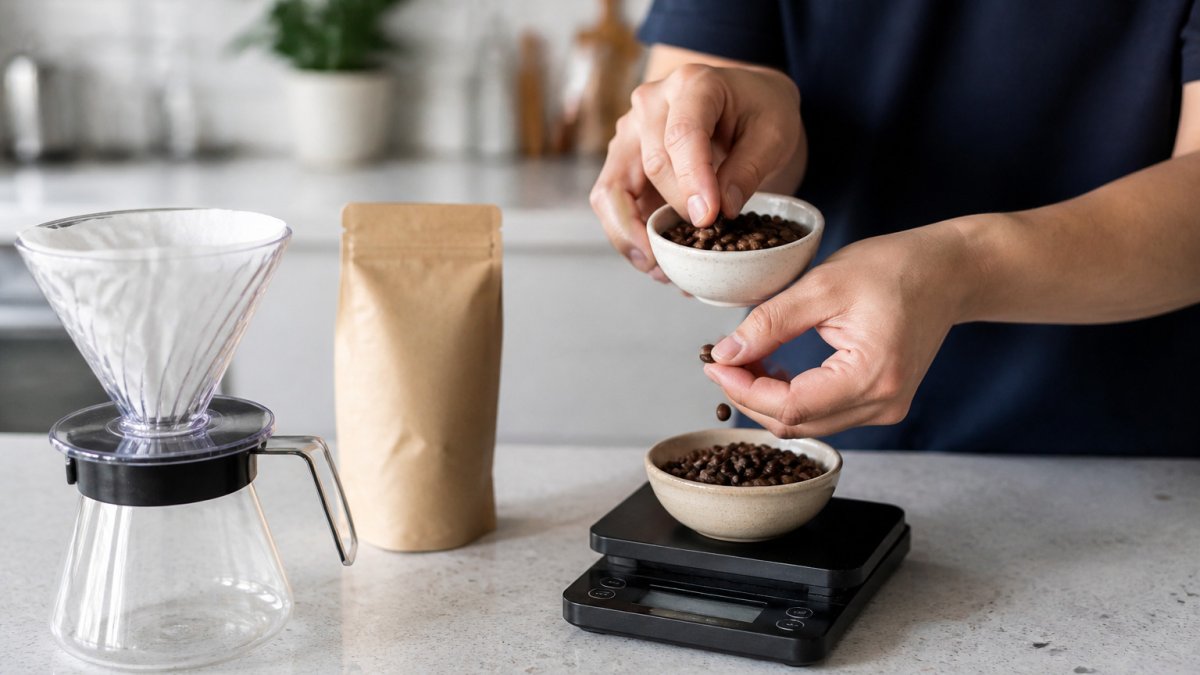
What organic does not automatically change is the flavour of the cup. Taste depends far more on variety, altitude, processing, roast profile and how fresh the beans are. Two bags of equal quality can taste very different, and an organic bag that has sat on a shelf for months can taste flat. Treat organic as one factor in a set of factors, not a shortcut to a better cup.
What Organic Certification Does and Does Not Guarantee
Organic certification is often treated as a single badge, but in the UK it is a defined legal and inspection regime. Understanding its scope is the fastest way to judge whether the premium is buying what you think it is.
In the UK, organic food and drink is subject to organic production rules; the official government guidance sets out the current requirements (Organic food: labelling and advertising rules). Products sold as organic must come from operators certified under the applicable rules, and the main UK certification bodies include the Soil Association, Organic Farmers & Growers, the Biodynamic Association and the Irish Organic Association for cross-border supply. These bodies inspect producers, processors and importers against standards covering land management, permitted inputs, separation from non-organic production, record-keeping and traceability. Certification is not a one-off: operators are inspected at least annually, and certificates can be suspended or withdrawn if standards slip.
The label therefore tells you something specific and verifiable:
- Growing inputs: synthetic pesticides and synthetic fertilisers are restricted, and the burden falls on the producer to show permitted methods were used.
- Processing and handling: organic and non-organic streams must be kept separate, with documented traceability from farm to pack.
- Inspection: an independent control body has audited the operation, not just the marketing copy.
What it does not guarantee is just as important:
- Flavour or quality: organic status says nothing about variety, altitude, processing, roast profile or freshness. A stale organic bag can taste worse than a fresh conventional one.
- Worker welfare or fair pay: these are labour and trade standards, covered by separate schemes such as Fairtrade, Rainforest Alliance or direct-trade arrangements. Organic certification is an environmental production standard, not a social one.
- Low residues in every case: organic rules restrict synthetic inputs but do not certify a zero-residue product, and contamination can occur through drift, storage or transport. Independent testing is the only way to verify residues in a specific lot.
- Nutritional superiority: certification makes no health or nutrition claim, and the evidence for health benefits beyond general coffee consumption is limited.
A practical habit is to read the certification alongside three other signals: the roast date, the origin and processing information, and whether the seller explains who grew the coffee and how it was handled. Certification answers the question 'how was this grown?'. It does not answer 'is this good coffee?', 'were the farmers paid fairly?' or 'is it fresh?'. Treating it as one input among several is the difference between buying a label and buying a cup you will enjoy.
UK organic certification control bodies
Is Organic Coffee Healthier? Weighing the Evidence
This is the claim buyers hear most often, and it is the one where the evidence is least settled. Organic coffee is grown with fewer synthetic chemical inputs, so it is reasonable to expect lower residues. Some people also value avoiding those residues on principle.
Health claims beyond that are harder to support. Coffee contains antioxidants whatever its growing method, and the amount in your cup depends more on roast and brew than on certification. Be cautious with any claim that organic coffee is clearly healthier, and look for independent testing or peer-reviewed research before accepting it. If health is your main reason for buying, your own doctor is a better guide than a product label.
Does Organic Coffee Taste Better?
Not reliably. Organic coffee is not a flavour category, and the taste gap between an organic and a conventional bag is usually smaller than the gap caused by roast level, freshness and origin. Many people can fail a blind comparison between two well-made coffees, regardless of certification.
The better test is to buy two bags of similar roast and freshness, one organic and one not, and brew them side by side. Your own palate will tell you more than any marketing. If the organic bag tastes better to you, that is a valid reason to pay more. If it does not, you have saved yourself money without losing anything on the cup.
Freshness, Roast Date and Storage: Factors Organic Status Cannot Fix
Freshness often matters more to flavour than organic status does. Coffee starts losing aromatic compounds soon after roasting, so a bag that has been sitting for weeks can taste dull whatever its certification says. Look for a roast date rather than only a best-before date, and buy in quantities you can finish while the beans are still fresh.
Storage matters too. Keep beans in an airtight container away from light, heat and moisture, and grind just before brewing where you can. Our beans are roasted throughout the week for freshness, and we offer four grind sizes plus whole bean options to help match the grind to your brewer. A fresh conventional bag, stored well, will often beat an old organic bag left on a sunny windowsill.
Choosing Your Next Bag Based on What You Actually Value
The right choice depends on your priorities, so it helps to rank them first. Here is a simple way to think it through:
- If farming methods matter most: Choose a certified organic coffee and check the origin information for details about the farm and the supply chain.
- If flavour matters most: Prioritise a recent roast date, a clear origin and a roast profile you enjoy over organic status alone.
- If budget matters most: Compare cost per cup, and consider a fresh conventional bag from a roaster you trust.
- If you want both: Look for organic coffee that also has a roast date, transparent sourcing and a roast style that suits your brewer. You can browse a well-regarded single origin such as Kenya Nyeri AA now.
Whatever you choose, taste it and judge it yourself. Organic coffee is worth the extra cost for buyers who value how it is grown and who enjoy the cup. It is less compelling for buyers who mainly want a fresh, well-roasted coffee at a sensible price. If you want to explore fresh, ethically sourced beans with custom grind options, you can shop now at Kiboko Coffee Co and see which profile suits your brewing routine.
Frequently Asked Questions
Are organic foods worth the extra cost?
Whether organic food is worth the extra cost depends on what you are paying for. Organic certification in the UK means beans were grown without synthetic pesticides and fertilisers and that the operation was inspected by an approved certification body. It does not, by itself, mean the beans taste better or are more nutritious. If your priorities are lower synthetic input use and supporting certified farming systems, the premium can be justified. If your priority is flavour, freshness and roast quality, those factors matter more and should be compared directly between bags.
Is organic coffee better for the environment?
Organic farming avoids synthetic pesticides and fertilisers, which can support soil health and biodiversity on the farm. However, environmental outcomes depend heavily on farm practices, yields and local conditions, so organic status alone does not settle the question. Shade-grown and agroforestry systems, which may or may not be certified organic, can also deliver strong environmental benefits. Look at what the producer actually does rather than assuming the label tells the whole story.
Does organic coffee contain fewer pesticide residues?
Organic coffee is grown without synthetic pesticides, so residues from those inputs are expected to be lower than in conventional coffee. Coffee is generally a low-residue crop, and independent lab testing is the only reliable way to confirm levels for a specific product. Where a brand publishes third-party test results, those are more useful than general claims. Organic certification does not rule out contaminants entirely, since residues can drift from neighbouring farms or come from post-harvest handling.
How can you tell whether coffee is certified organic?
Certified organic coffee should display the logo or certification number of an approved UK or recognised international certifier. Check that the certificate number is listed on the packaging and, where possible, verify it against the certifier's public register. Be wary of vague terms such as natural, eco or sustainably grown, which are not the same as certification. Certification tells you about production methods, so pair it with information on roast date and origin to judge quality.