Table of Contents
- Why Freshness Matters for Your Coffee Beans
- The Best Way to Store Coffee Beans at Home
- How Long Do Coffee Beans Stay Fresh After Purchase
- Using an Airtight Coffee Storage Container
- Should You Consider Freezing Coffee Beans
- Common Mistakes That Damage Coffee Freshness
- Recognising Stale Coffee Beans Before Brewing
- Frequently Asked Questions
Last Updated: October 7, 2026
Why Freshness Matters for Your Coffee Beans
The moment coffee beans are roasted, they begin to lose their flavour. To keep coffee beans fresh is essential if you want to enjoy the rich, complex tastes that make specialty coffee worth buying in the first place.
Fresh beans taste noticeably better. Stale beans taste flat, bitter, or muted, like the difference between biting into a crisp apple and one that's been sitting in the cupboard for months. The volatile compounds that create coffee's distinctive flavours fade quickly once the beans are exposed to air, light, heat, or moisture (Effect of Temperature and Storage on Coffee’s Volatile Compound Profile and Sensory...).
This is why we at Kiboko Coffee Co roast our beans throughout the week. We don't stockpile months' worth, we roast fresh batches regularly so your order arrives at peak flavour. The difference between drinking coffee from beans roasted three days ago versus three weeks ago is dramatic. You'll notice more clarity in the taste, better aroma, and a smoother finish.

The good news: keeping coffee beans fresh isn't complicated. You don't need special equipment or expert knowledge. A few simple practices will preserve your beans' flavour for weeks.
The Best Way to Store Coffee Beans at Home
The enemy of fresh coffee beans is simple: air, light, heat, and moisture. Store your beans away from all four, and they'll stay fresh much longer.
Choose the Right Container
Your container matters more than most people think. Beans stored in paper bags or open containers lose flavour rapidly because air gets in constantly.
The best containers are airtight. Glass jars with rubber seals work well. Ceramic containers with tight-fitting lids are excellent. Stainless steel canisters are durable and protect beans from light.
Avoid clear glass unless you can store it in a dark cupboard. Light, especially direct sunlight, degrades coffee beans quickly. If you use a clear container, keep it in a dark place.
Many people keep their beans in the original bag. If your bag doesn't seal properly, this won't protect your beans well. You can improve this by using the Stainless Steel Kiboko Coffee Clip (£4.99). This simple accessory creates an airtight seal on your coffee bag, locking in freshness and aroma. It's crafted from premium stainless steel and works on any bag with a fold-over top.
Control Temperature and Light
Keep your beans in a cool, dark place. Room temperature is fine, you don't need a fridge or freezer for short-term storage. A kitchen cupboard away from the cooker works perfectly. Avoid areas above radiators or near windows where sunlight hits.
Temperature swings are worse than consistent coolness. A cupboard that stays roughly the same temperature all day is better than a spot that gets warm in the afternoon and cool at night.
Keep beans away from strong-smelling foods. Coffee is porous and absorbs odours. Store it separately from spices, onions, or anything pungent.
How Long Do Coffee Beans Stay Fresh After Purchase
Most coffee beans stay at their best for about two to four weeks after roasting. This is the window where you'll experience the full flavour profile the roaster intended.
After four weeks, the beans don't go bad, they just taste less vibrant. The flavours flatten. The aroma becomes muted. By eight weeks, most beans taste noticeably stale.
This timeline assumes proper storage. Beans kept in an airtight container in a cool, dark place will last longer than beans left in a paper bag on the worktop.
When you buy from Kiboko Coffee Co, your beans arrive fresh because we roast throughout the week. You're not waiting for stock to ship from a warehouse where it's been sitting for months. This freshness advantage matters enormously for the cup you'll brew.
Check the roast date on your bag. This tells you exactly when the beans were roasted. If no roast date is listed, that's a red flag, you don't know how old they are.
Using an Airtight Coffee Storage Container
An airtight container is the simplest way to keep coffee beans fresh at home. The seal prevents air from entering, which slows down the oxidation process that stales coffee.
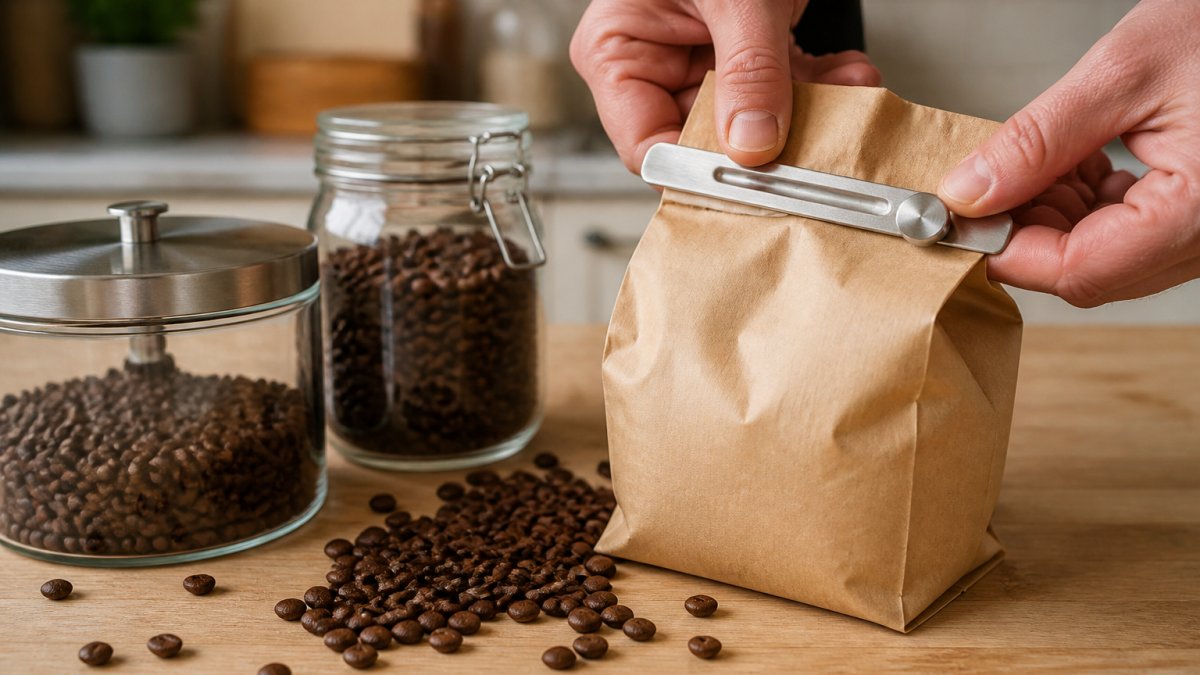
Glass jars with rubber gasket seals work exceptionally well. They're airtight, keep light out if you store them in a cupboard, and let you see your beans at a glance. Ceramic canisters with tight lids are equally effective and often more stylish.
If you prefer to keep beans in their original bag, use a quality clip like the Stainless Steel Kiboko Coffee Clip. This creates a secure seal that locks out air and moisture. The stainless steel construction lasts for years and works on any resealable bag.
Whatever container you choose, make sure it seals completely. A loose seal defeats the purpose. Press the lid down firmly or check that your clip is tight before storing.
Should You Consider Freezing Coffee Beans
Freezing coffee beans is controversial among coffee enthusiasts. Some swear by it. Others say it damages the beans. The truth is more nuanced.
Freezing slows down staling dramatically. Beans in the freezer can stay fresh-tasting for several months. If you buy large quantities or want to store beans long-term, freezing works.
Stainless Steel Kiboko Coffee Clip →
The catch: freezing and thawing creates condensation. When you take frozen beans out of the freezer, moisture condenses on them as they warm up. This moisture damages flavour and can introduce mould if you repeat the cycle.
The solution is simple: freeze beans in small portions. Use an airtight container or vacuum-sealed bag. Remove only the portion you need, then return the rest to the freezer immediately. Don't open and close the same container repeatedly.
For most home brewers, freezing isn't necessary. If you buy fresh beans every two to three weeks and store them properly at room temperature, you'll have excellent coffee. Freezing is most useful if you buy in bulk or want to preserve beans beyond a month.
Common Mistakes That Damage Coffee Freshness
Most people damage their coffee beans without realising it. These mistakes are easy to fix.
Storing beans in the fridge. The fridge introduces moisture and temperature fluctuations. Your beans absorb odours from other foods. Room temperature in a sealed container is far better.
Leaving the bag open. Beans exposed to air lose flavour rapidly. Even a few hours on the counter makes a difference. Seal your container immediately after scooping beans.
Buying pre-ground coffee. Ground coffee goes stale in days, not weeks. Whole beans stay fresh much longer. Grind your beans just before brewing for the best flavour.
Storing near heat sources. Cupboards above the cooker, near radiators, or in direct sunlight accelerate staling. Find a cool, dark spot instead.
Buying too much at once. Large quantities mean some beans sit around for months. Buy smaller amounts more frequently. Fresh beans matter more than convenience.
Ignoring the roast date. If your beans don't have a roast date, you don't know how old they are. Always check. Avoid beans roasted more than four weeks ago.
Recognising Stale Coffee Beans Before Brewing
Stale beans show clear signs. Learning to spot them saves you from brewing disappointing coffee.
Lack of aroma. Fresh beans smell rich and complex. Stale beans smell flat or muted. Open your container and take a deep breath. Fresh beans announce themselves immediately.
Dull appearance. Fresh beans have a slight sheen. Stale beans look matt and dry. This visual change reflects what's happening inside, the oils and compounds that create flavour are fading.
Weak crema. When you brew espresso, crema is the golden foam on top. Fresh beans produce thick, lasting crema. Stale beans produce thin, short-lived crema. This happens because the gases that create crema diminish over time.
Flat taste. The most obvious sign: the coffee tastes boring. Flavours are muted. The complexity is gone. If your coffee tastes flat, your beans are probably past their peak.
Bitter or sour notes. Sometimes stale beans taste harshly bitter or sour instead of flat. This happens when beans are stored poorly, exposed to heat, light, or air. Poor storage damages the beans in ways that create unpleasant flavours.
If you notice any of these signs, your beans are still safe to drink. They're just not at their best. This is why buying fresh beans regularly makes such a difference.
Keeping coffee beans fresh is the foundation of great home brewing. The best grinder, the best brewing method, the best water, none of it matters if your beans are stale. Store your beans in an airtight container, keep them cool and dark, and use them within a few weeks of roasting.
At Kiboko Coffee Co, we help you skip the guesswork. Our beans arrive fresh because we roast throughout the week, not months in advance. We offer whole beans and four grind sizes so you can brew exactly how you like. With our Stainless Steel Coffee Clip and ethically sourced, freshly roasted beans, you'll experience the flavour difference that fresh coffee makes. Shop now and taste the difference for yourself.
Frequently Asked Questions
What is the best way to store coffee beans to keep them fresh?
Store coffee beans in an airtight container away from direct sunlight, heat, and moisture. A cool, dark cupboard works well. Keep the container sealed between uses, and avoid the fridge unless your kitchen is particularly warm. Use a stainless steel clip like the Kiboko Coffee Clip (£4.99) to seal opened bags tightly, locking out air and moisture that cause flavour loss.
How long do coffee beans stay fresh after opening the bag?
Whole coffee beans remain at peak freshness for 2-4 weeks after opening, depending on storage conditions. Beans start losing their distinctive flavour after the first week due to oxidation. To extend freshness, store in an airtight container in a cool, dark place. Ground coffee deteriorates much faster, within 1-2 weeks, so grind only what you'll use within a few days.
Can you freeze coffee beans without affecting the flavour?
Freezing can preserve coffee beans longer, but it risks flavour loss and moisture damage. If you choose to freeze, use an airtight, moisture-proof container and keep beans in the freezer long-term without removing them frequently. Avoid thawing and refreezing, as condensation damages the beans. For most home brewers, proper room-temperature storage in an airtight container is simpler and maintains better flavour.
Should coffee beans be stored in their original bag?
Original bags often have one-way valves that release gases but let air in over time. For maximum freshness beyond the first week, transfer beans to an airtight container or seal the original bag with a clip. If keeping beans in their original bag, use a quality clip to create an airtight seal and store in a cool, dark cupboard away from sunlight and heat.