Table of Contents
- Why Specialty Coffee Beans Are Worth Switching To
- Best Specialty Coffee Beans for Beginners: Quick Comparison
- Coffee Blends for Beginners: The Easiest Place to Start
- Single-Origin Coffee for Beginners: Where to Begin
- Best Medium Roast Coffee Beans for New Drinkers
- How to Choose Coffee Beans: A Simple Guide
- How to Brew Your First Bag Without Fuss
- Frequently Asked Questions
Last Updated: 5 October 2026
Why Specialty Coffee Beans Are Worth Switching To
Specialty coffee beans are beans that have been graded for quality, traceable to a specific origin, and roasted to bring out their natural character rather than disguise it. At Kiboko Coffee Co, we roast to order for people making the move from capsules to a proper brew. If you are spending a fortune on pods and wondering whether loose beans are worth the switch, the short answer is yes.
The longer answer is about freshness. Supermarket beans often sit on a shelf for months before you open the bag. Coffee is at its best in the weeks after roasting, and most of what you taste in a great cup comes down to how recently it was roasted. That is the single biggest difference you will notice.
Coffee blends for beginners are the easiest place to start, because a good roaster has already done the balancing work for you.
Best Specialty Coffee Beans for Beginners: Quick Comparison
Here is the fast version. Every bag below is £10.99, so price is not the deciding factor. Flavour and how you drink your coffee are.
| Coffee | Tasting Notes | Best For | Roast |
|---|---|---|---|
| Nyumba Blend | Pecan, toffee, milk chocolate | Espresso, flat white, Americano | Medium |
| Tamu Blend | Milk chocolate, raisin, vanilla | Filter, pour-over, latte | Medium |
| Brazil Cerrado | Caramel, hazelnut, dark chocolate | Pour-over, AeroPress, mocha | Medium |
| Colombia Antioquia | Cedar, walnut, chocolate | Espresso, flat white | Medium |
| Costa Rica Tarrazu | Malt, plum, dark chocolate | Flat white, cappuccino, latte | Medium |
| Guatemala La Antigua | Malt, blackberry, cocoa powder | Filter, pour-over | Medium |
| Ethiopia Irgachefe | Earl Grey, jasmine, whisky | Espresso, filter | Medium |
| Mexico Chiapas Decaf | Red berries, almond, milk chocolate | Evening coffee, with milk | Medium |
Coffee Blends for Beginners: The Easiest Place to Start
A blend combines beans from more than one origin so the roaster can balance sweetness, body, and acidity into something consistent and forgiving. For a new drinker, that consistency matters more than any single flavour note. You get the same cup every morning without having to think about it.

Nyumba Blend: The Everyday House Cup
Nyumba is our house blend, and it is where we point almost everyone starting out. It draws on Guatemala's Antigua Valley and Brazil's Cerrado region, roasted to a balanced medium. Expect pecan, toffee, and a clean milk chocolate finish.
It works as an espresso, holds its own in a flat white, and tastes just as good through a cafetière. Available whole bean or in four grind sizes, in 250g, 500g, and 1kg.
Tamu Blend: Built for Sweetness
Tamu means sweet, and that is exactly what it delivers. Beans from Brazil's Sul de Minas and El Salvador's Finca Las Isabellas give a velvety, low-acidity cup with milk chocolate, raisin, and vanilla. It is especially good as a filter or pour-over, and smooth enough in a latte.
Single-Origin Coffee for Beginners: Where to Begin
Single-origin coffee for beginners works best when you pick a region known for a gentle, approachable profile. Start with Brazil or Colombia, then move to Central America, and save the brighter African coffees for when you want something more adventurous.
Brazil Cerrado: Smooth, Nutty and Low in Acidity
If you drink your coffee black and want something easy, start here. Cerrado's high plateau gives a smooth, chocolate-forward cup with caramel up front, hazelnut in the middle, and a dark chocolate finish. It shines through pour-over and AeroPress.
Colombia Antioquia: Balanced and Nutty
Colombian coffee earned its reputation for a reason. This Antioquia single origin is mild, nutty, and beautifully balanced, with notes of cedar, walnut, and chocolate. It is excellent as an espresso and pairs well with a splash of milk in a flat white.
Costa Rica Tarrazu: Creamy and Milk-Friendly
Tarrazu is the one our customers reach for most often when milk is involved. Grown above 1,500 metres on volcanic soil, it has a creamy body built for flat whites, cappuccinos, and lattes, with malt, plum, and dark chocolate notes underneath.
Guatemala La Antigua: Bright and Aromatic
Grown in volcanic valleys beneath three volcanoes, La Antigua is bright and aromatic, with malt, blackberry, and cocoa powder. It makes a fantastic filter coffee and rewards a careful pour-over.
Ethiopia Irgachefe: Floral and Complex
Coffee began in Ethiopia, and this one tastes like it. Heirloom varieties give an unmistakably different cup: Earl Grey, jasmine, and a whisky-like depth. It is the most adventurous pick on this list, and a brilliant espresso.
Mexico Chiapas Decaf: Full Flavour, No Caffeine
Decaf does not have to taste like cardboard. This Chiapas single origin is processed with mountain water to leave it 99.9% caffeine free, and it still delivers red berries, almond, and milk chocolate. It is lovely with milk in the evening.
Best Medium Roast Coffee Beans for New Drinkers
Medium roast is the best starting point for most people, which is why every coffee on this list is roasted to that level. Medium sits between the bright, acidic character of a light roast and the smoky heaviness of a dark roast. It keeps the bean's natural sweetness intact while rounding off the sharp edges.
Dark roasts often taste bitter because the roast, not the bean, is doing the talking. Light roasts can taste sour if your brewing is not dialled in yet. Medium gives you room to learn without punishing you for small mistakes.
How to Choose Coffee Beans: A Simple Guide
Choosing comes down to three questions: how you brew, whether you take milk, and whether you want caffeine. Answer those and the list above narrows itself.
- Espresso or milk drinks? Choose Nyumba, Colombia Antioquia, or Costa Rica Tarrazu.
- Filter, pour-over, or cafetière? Choose Tamu, Brazil Cerrado, or Guatemala La Antigua.
- Want something different? Choose Ethiopia Irgachefe.
- Drinking in the evening? Choose Mexico Chiapas Decaf.
- Not sure? Start with Nyumba. It is the most forgiving.
One more thing worth knowing: buy whole bean and grind just before brewing if you can. Pre-ground coffee loses its aroma far faster. If you would rather not deal with a grinder, order ground to suit your brewer instead. We offer four grind sizes plus whole bean, so you can match the grind to your kit.

How to Brew Your First Bag Without Fuss
Brewing well is simpler than the internet makes it look. Pick one method, keep it consistent for a week, and adjust only one thing at a time.
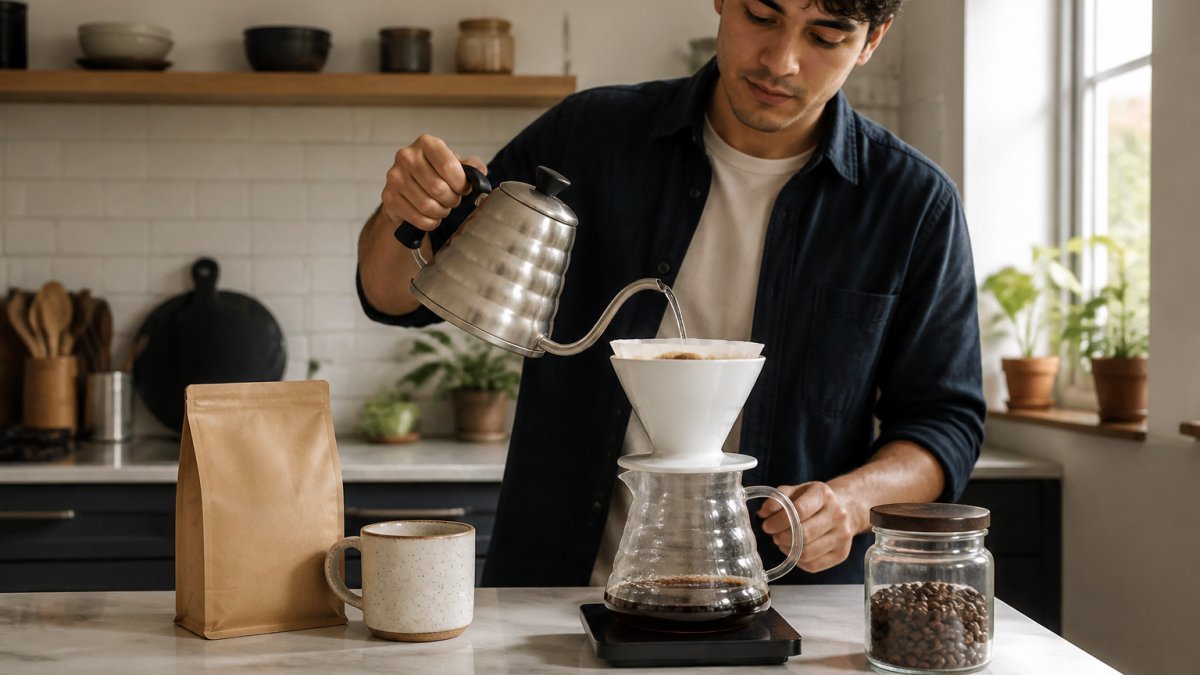
- Weigh your coffee. Around 60g per litre of water is a reliable starting ratio.
- Heat your water. Just off the boil, roughly 92-96°C.
- Grind to suit your brewer. Medium for filter and cafetière, fine for espresso.
- Brew and taste. If it is sour, grind finer. If it is bitter, grind coarser.
- Drink it fresh. Finish the bag within a few weeks of opening for the best flavour.
A common mistake is changing everything at once. Change one variable, taste, then decide. That is how you learn what you actually like.
The hardest part of moving to specialty coffee is not the brewing. It is choosing your first bag without wasting money on something that does not suit how you drink. Kiboko Coffee Co roasts to order throughout the week, so your beans arrive fresh rather than sitting in a warehouse, and every kilo sold donates £1 to Farm Africa. You can order whole bean or one of four grind sizes, and most orders arrive the next working day. Get started with Kiboko Coffee Co and find the cup that makes the switch worth it.
Frequently Asked Questions
What are the best specialty coffee beans for beginners?
Start with a medium-roast blend like Nyumba or Tamu, both £10.99 for 250g. Blends combine origins to give a balanced, forgiving cup that works in most brewers. If you want to try a single origin, Brazil Cerrado is smooth and low in acidity, while Colombia Antioquia is mild and nutty. All are 100% Arabica and roasted to order, so they arrive fresh.
Are single-origin coffee beans suitable for beginners?
Yes, and single-origin coffee for beginners is a great way to learn how origin shapes flavour. Brazil Cerrado is the easiest entry point because its low acidity and chocolate notes suit any brewer. Colombia Antioquia is similarly approachable. More floral options like Ethiopia Irgachefe are best once you are comfortable with your brewing routine.
What is the difference between a coffee blend and a single origin?
A blend mixes beans from more than one origin, like Nyumba (Guatemala and Brazil) or Tamu (Brazil and El Salvador). This creates a consistent, balanced cup that is easy to brew. A single origin comes from one region, such as Costa Rica Tarrazu or Ethiopia Irgachefe, and highlights that area's specific flavour. Beginners often find blends more forgiving while learning.
Should beginners choose light, medium or dark roast coffee?
Medium roast is the safest starting point. It keeps the bean's natural sweetness while adding enough body to work with milk or drink black. Every coffee in the Kiboko range is medium roast, so you can compare origins without roast level confusing the picture. Once you know which flavours you enjoy, you can explore lighter or darker roasts.
How fresh should coffee beans be when you buy them?
Freshness matters more than almost anything else. Look for a roast date, not just a best-before date, and aim to brew within two to six weeks of roasting. Kiboko roasts to demand and rests each batch before packing, and most orders arrive next working day, so your beans reach you close to peak flavour.