Table of Contents
- Single Origin Coffee vs Coffee Blends: The Key Differences
- What Single Origin Coffee Meaning Really Tells You
- Coffee Blend Meaning: Why Roasters Combine Origins
- Single Origin vs Blend Espresso: Which Pulls a Better Shot?
- How to Choose Coffee Beans for Home Brewing
- Pros and Cons at a Glance
- Frequently Asked Questions
Last Updated: October 12, 2026
Single Origin Coffee vs Coffee Blends: The Key Differences
Single origin coffee is coffee sourced from one defined place: a single farm, a single cooperative, or a single growing region within one country. A coffee blend combines beans from two or more origins, roasted together to create one consistent flavour profile. That is the whole distinction in a sentence, and everything else follows from it. At Kiboko Coffee Co, we roast both styles, and the question we hear most often is not which one is better but which one suits how you actually drink coffee at home.
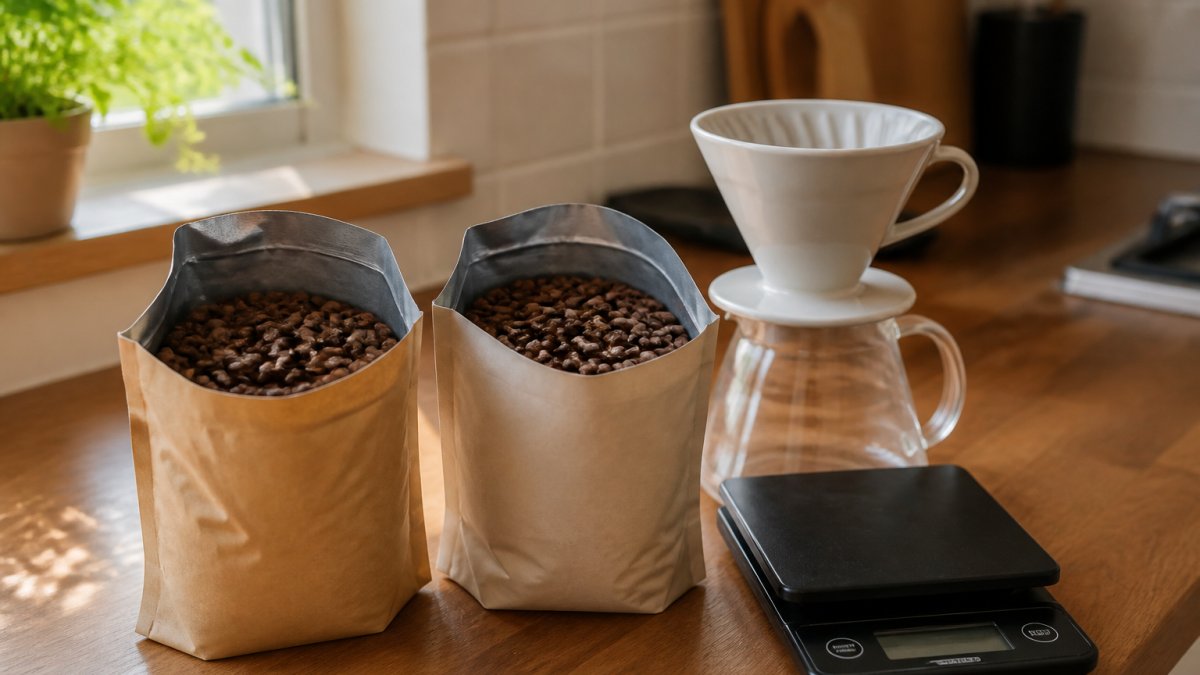
Here is the short answer. Choose single origin when you want to taste the character of one place, and accept that each harvest will taste slightly different from the last. Choose a blend when you want the same cup every morning, particularly if you drink your coffee with milk. Neither choice is more sophisticated than the other, despite what a lot of coffee marketing implies.
The Specialty Coffee Association's guidance on origin and quality treats origin transparency as a core marker of speciality grade, which is why single origin bags carry so much detail on the label. Blends are not held to the same traceability standard, and that is precisely the trade-off you are making.
What Single Origin Coffee Meaning Really Tells You
The term single origin is not legally regulated, which is why it gets stretched. At its strictest, it means one farm or one washing station. At its loosest, it can mean any coffee from one country. A bag labelled "Ethiopia" is technically single origin, but it may be a mix of beans from several regions within Ethiopia.
Useful labels go further. They name the region, the cooperative or estate, the altitude, and often the variety. Our Ethiopia Irgachefe names the Yirgacheffe region in southern Ethiopia and the heirloom varieties grown there. That level of detail is what you are paying for.

Traceability and Terroir in a Single Origin Bag
Terroir is the idea that soil, altitude, rainfall and processing methods give coffee from one place a flavour you cannot reproduce elsewhere. It is the same concept that explains why wines from two neighbouring vineyards taste different.
In practice, terroir shows up as distinctiveness. Our Brazil Cerrado carries caramel, hazelnut and dark chocolate notes from the high plateau of Minas Gerais. Our Ethiopia Irgachefe tastes of Earl Grey, jasmine and a whisper of whisky, because high-altitude heirloom varieties processed in Yirgacheffe simply taste like that. Put the two side by side and the difference is obvious, even to someone who has never cupped coffee before.
That distinctiveness is the point. It is also the catch. A single origin is a snapshot of one harvest, so next year's crop will not taste identical. If you love a coffee because of a specific flavour note, that note may shift.
Coffee Blend Meaning: Why Roasters Combine Origins
Coffee blend meaning is simpler than most people expect: a blend is a deliberate recipe. A roaster selects two or more origins, decides what proportion of each to use, and roasts them so the finished coffee tastes like one coherent cup rather than several competing ones.
The reason roasters blend is control. A single origin rises and falls with the harvest. A blend lets the roaster adjust proportions to keep the flavour steady, cup after cup, year after year. That is why blends dominate cafe menus and supermarket shelves: customers expect the same drink every time.
Consistency, Balance and the Role of the House Blend
The house blend is the clearest expression of this idea. It is the coffee a roaster is willing to put their name behind as the everyday cup, built to work across brewing methods.
Our Nyumba Blend is exactly that. It pairs Guatemala's Antigua Valley with Brazil's Cerrado region, roasted to a balanced medium that lands on pecan, toffee and a clean milk chocolate finish. It is smooth enough to drink black, rich enough to hold its own against milk, and it tastes the same in January as it does in July. For anyone moving on from capsules, that predictability matters more than novelty.

Balance is the other reason to blend. Our Nyororo Blend draws on three continents: Brazil for a nutty foundation and natural sweetness, Costa Rica for bright acidity and a clean finish, Indonesia for earthy depth and body. The result is vanilla, blueberry and milk chocolate in one cup. No single origin delivers that combination, because no single origin contains three continents.
Single Origin vs Blend Espresso: Which Pulls a Better Shot?
For espresso specifically, blends usually win on consistency and single origins usually win on interest. Blends are formulated to behave predictably under pressure, which matters when you are dialling in a grinder every morning and want the same result each time. Single origins shift as the beans age, so your grind setting needs adjusting more often.
That said, a single origin espresso can be genuinely memorable. Our Ethiopia Irgachefe pulls a bright, aromatic shot with a distinctive character that no blend replicates, and it is the coffee we would hand to someone who says all espresso tastes the same. Our Shujaa Blend takes the opposite approach: a dark roast built for milk, with caramel up front, dark chocolate in the middle and a long date finish, plus enough body to survive a flat white without disappearing under steam.
| Factor | Single Origin | Blend |
|---|---|---|
| Flavour | Distinctive, place-specific | Balanced, designed |
| Consistency | Varies by harvest | Stable year-round |
| Espresso behaviour | Needs frequent dialling in | Predictable under pressure |
| Best with milk | Can get lost | Built to hold up |
| Best for | Exploring flavour | Everyday routine |
How to Choose Coffee Beans for Home Brewing
Choosing coffee beans for home brewing comes down to three questions: how you brew, how you drink it, and how much variation you want in your cupboard. Answer those honestly and the choice makes itself.
Work through this checklist before you buy:
- How do you brew? Espresso and moka pot reward blends for their consistency. Pour-over, AeroPress and cafetière show off single origins best.
- Do you add milk? If yes, lean towards a blend with body. If you drink black, a single origin's clarity is the bigger reward.
- How often do you want change? A blend gives you the same cup daily. A single origin gives you a new experience with each crop.
- What grind do you need? Match the grind to your brewer, and buy whole bean if you own a grinder.
- When was it roasted? Freshness beats origin every time. Coffee stales within weeks of roasting, so a fresh blend outperforms a stale single origin.
That last point deserves emphasis. A common mistake is spending on a prestigious single origin and then leaving it in the cupboard for two months. Roasted-to-order coffee, rested and packed close to dispatch, will taste better than any origin label can promise.
Pros and Cons at a Glance
Single origin pros: distinctive, traceable flavour; a clear window into one region's character; genuinely different from anything on a supermarket shelf. Single origin cons: less consistent between harvests; less forgiving in espresso; usually costs more per bag because small lots command higher prices.
Blend pros: consistent cup after cup; balanced by design; better value because roasters can use more affordable components; more forgiving across brewing methods. Blend cons: less traceability; individual origins are harder to taste; can hide lower-quality beans behind clever roasting.
Our own range sits on both sides of that line, and every bag, single origin or blend, contributes £1 per kilo to projects supporting coffee-growing communities in Africa through our Doing Good promise. That applies whether you choose a blend at £10.99 or a single origin at £10.99, so the ethical decision does not force the flavour decision.
Frequently Asked Questions
What is the difference between single origin coffee and a blend?
Single origin coffee comes from one country, region or farm, so the flavour reflects that specific place. A blend combines beans from two or more origins, chosen by the roaster to create a consistent, balanced cup. Kiboko's Brazil Cerrado is a single origin from Minas Gerais, while the Nyumba Blend pairs Guatemala Antigua with Brazil Cerrado for pecan, toffee and milk chocolate notes that stay steady batch after batch.
Are coffee blends lower quality than single origin coffee?
No. Blending is a deliberate craft, not a way to hide poor beans. Roasters combine origins so each contributes something the others lack, such as body, acidity or sweetness. The Nyororo Blend draws on Brazil, Costa Rica and Indonesia to build a velvety body with vanilla, blueberry and milk chocolate notes. Quality depends on the beans chosen and how they are roasted, not on whether the bag says single origin or blend.
Which is better for espresso: a blend or single origin coffee?
Blends are the safer bet for espresso because their recipe is fixed, so dialling in stays predictable and the shot holds up in milk. Single origin espresso can be outstanding when it suits the bean, as with the Ethiopia Irgachefe, whose jasmine and Earl Grey notes shine as a bright, aromatic shot. If you drink flat whites daily, start with a blend. If you want to taste a region clearly, try a single origin.
Is single origin coffee more expensive than a blend?
Not necessarily. At Kiboko, the Brazil Cerrado single origin and the Nyumba Blend both start at £10.99 for 250g, so the price is the same. Single origins from small lots or rare varieties can cost more elsewhere, but a straightforward single origin and a well-built blend often sit at similar price points. Judge value by freshness, roast date and traceability rather than the category alone.
How do I choose between single origin coffee and a blend for home brewing?
Start with how you drink coffee. If you want a dependable everyday cup that works black or with milk, a blend like Nyumba is the practical choice. If you enjoy noticing how a Kenyan or Ethiopian coffee differs from a Brazilian one, buy single origins and brew them as filter or pour-over. Many home brewers keep both: a blend for the morning routine and a single origin for slower weekend brews.
The real challenge is not picking a side. It is finding a roaster who tells you honestly what is in the bag, roasts close to dispatch, and grinds to suit your brewer. That is what we do at Kiboko Coffee Co: ethically sourced specialty coffee, roasted through the week for freshness, available in four grind sizes plus whole bean, with fast delivery and 315+ customer reviews behind it. Shop now and start with a blend for the everyday cup and a single origin for the weekends.