Table of Contents
- What High Quality Coffee Actually Looks Like
- How to Choose Coffee Beans: Reading the Bag
- How to Tell If Coffee Beans Are Fresh
- Coffee Tasting Notes for Beginners
- How to Store Coffee Beans to Protect Quality
- How to Identify High Quality Coffee in the Cup
- Common Mistakes That Hide Good Coffee
- Conclusion
- Frequently Asked Questions
Last Updated: October 18, 2026
What High Quality Coffee Actually Looks Like
High quality coffee is speciality-grade coffee scoring 80 or above on the industry's 100-point scale, grown at altitude, picked ripe, and roasted recently. That score comes from licensed graders who assess aroma, flavour, acidity, body and balance in the cup. In practice, though, you can spot the good stuff long before you brew it.
Here at Kiboko Coffee Co, we roast in small batches through the week and ship whole bean or ground to order. That short gap between roast and doorstep is what separates a lively cup from a flat one. Below, we walk through exactly how to read a bag, test freshness, taste like a beginner and store beans so they stay worth drinking.
The 2026 guide covers the whole chain, from shelf to cup. Get these steps right and you will stop guessing which bag is worth your money.
How to Choose Coffee Beans: Reading the Bag
The fastest way to choose coffee beans is to ignore the marketing and read four things: roast date, origin, varietal and processing method. A bag that names all four is telling you the roaster cares. A bag that names none is telling you something too.
Roast Date, Origin and Varietal
Look for a roast date, not a best-before date. Best-before tells you when the coffee is legal to sell, not when it tastes good. A roast date tells you how old the beans actually are.
Next, check the origin. A named region, farm or cooperative signals traceability. "Ethiopia Yirgacheffe" or "Kenya Nyeri" tells you where the coffee grew. A vague "blend of South American beans" does not.

Varietal matters too. Names like SL28, Bourbon or Heirloom point to deliberate cultivation. These are the varieties that produce the complex flavours speciality drinkers chase.
Finally, look at the process. Washed, natural and honey processing all change the cup. Washed coffees taste clean and bright. Natural coffees taste fruitier and heavier.
- Roast date: within the last few weeks
- Origin: a named region, farm or co-op
- Varietal: specific, not generic
- Process: washed, natural or honey, stated clearly
How to Tell If Coffee Beans Are Fresh
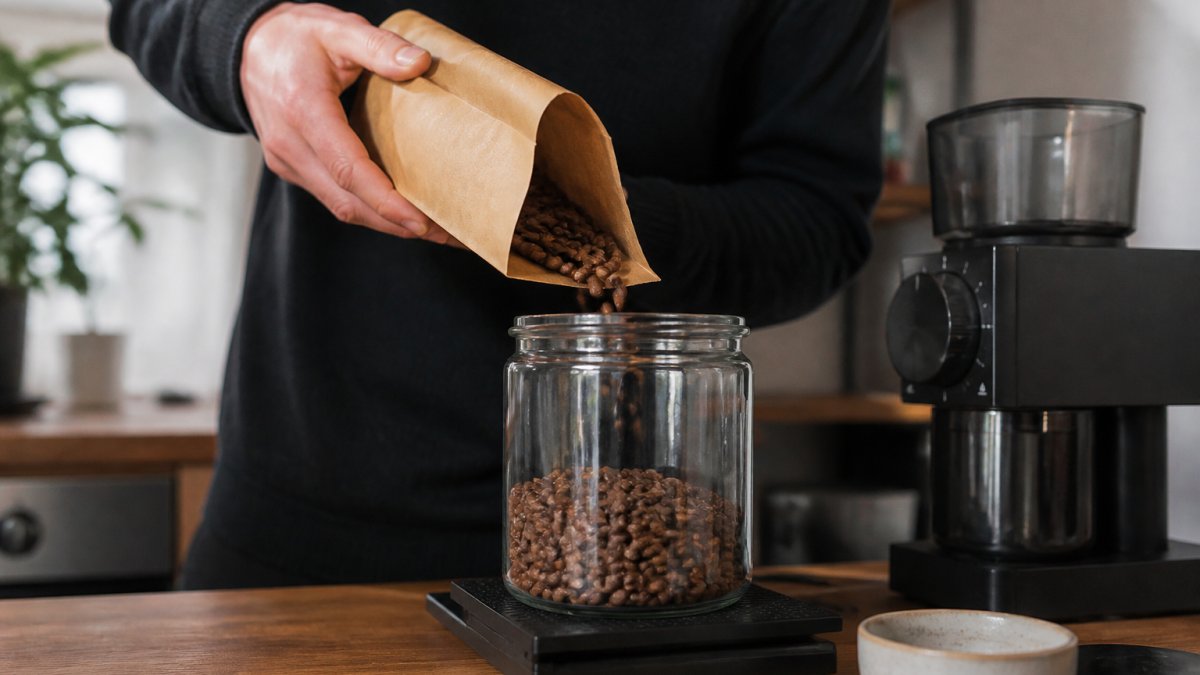
Fresh coffee beans smell sweet and complex, look evenly coloured and matte, and sound soft rather than sharp when you shake the bag. Stale beans smell of cardboard or nothing much at all. The difference is easy to spot once you know what to check.
The Senses Test: Smell, Look and Sound
Start with smell. Open the bag and breathe in. Fresh beans release a burst of aroma, often fruity, floral or chocolatey. Old beans smell flat or dusty.
Then look. Fresh beans have a dull, matte surface. Very oily, shiny beans are usually older or roasted dark. Neither is a good sign for flavour.
Finally, listen. Pour a few beans into your hand or shake the bag. Fresh beans make a soft, low sound. Stale beans rattle and crack because they have dried out and lost moisture.
Coffee Tasting Notes for Beginners
Coffee tasting notes describe the flavours you can expect in the cup, written by the roaster as a guide, not a test. You do not need a trained palate to enjoy them. You just need to slow down and pay attention.
Here is how to taste like a beginner, without the fuss:
- Smell before you sip. Most of what you taste comes from smell.
- Slurp, don't gulp. A small slurp spreads the coffee across your tongue.
- Look for one or two flavours. Not five. Start simple.
- Notice the finish. Does the flavour fade fast or linger?
Our Ethiopia Irgachefe, for example, lists Earl Grey, jasmine and whisky. You will not taste all three at once. You might catch the floral note first, then a tea-like finish. That is normal.
The trick is to compare. Brew two coffees side by side and note how they differ. Sweetness, acidity, body and finish are the four things worth tracking. Do that a few times and your palate sharpens fast.
How to Store Coffee Beans to Protect Quality
Store coffee beans in an airtight, opaque container at room temperature, away from light, heat and moisture. Whole beans stay fresh longer than ground coffee. Buy in amounts you will finish within a few weeks.
The four enemies of fresh coffee are air, light, heat and moisture. Keep beans away from all four and they will hold their flavour far longer.
- Use an airtight container. A sealed jar or the bag's own resealable pouch works.
- Keep it dark. A cupboard beats a clear jar on the windowsill.
- Skip the fridge. Moisture and food smells get in. The freezer is only worth it for long-term storage, and only in a sealed bag.
- Grind just before brewing. Ground coffee goes stale in days, not weeks.
How to Identify High Quality Coffee in the Cup
You can identify high quality coffee in the cup by four markers: clarity, sweetness, balance and a clean finish. A great cup tastes clean and sweet, with no harsh bitterness or dry, dusty aftertaste. It should make you want a second sip.
Here is what to look for:
- Clarity: the flavours are distinct, not muddy
- Sweetness: natural sweetness, not sugar
- Balance: acidity, body and flavour sit well together
- Finish: clean and pleasant, not bitter or drying
Bitterness is the biggest giveaway. Some bitterness is normal, especially in dark roasts. But a sharp, ashy or rubbery bitterness usually means stale beans, poor brewing or a low-grade green bean.
Acidity is not a flaw either. Good acidity feels bright and fruity, like a squeeze of citrus. Bad acidity tastes sour or vinegary. Learn to tell the two apart and you are most of the way there.
Common Mistakes That Hide Good Coffee
The most common mistake is buying pre-ground coffee and storing it for weeks. Ground coffee loses aroma within days. You can buy the best beans in the shop and still end up with a dull cup.
Other mistakes worth avoiding:
- Ignoring the roast date. A bargain bag with no date is often old stock.
- Storing beans in the fridge. Moisture and smells ruin them.
- Grinding too coarse or too fine. The wrong grind hides good flavour.
- Brewing with water that is too hot. Boiling water scorches the coffee and brings out bitterness.
- Judging a coffee on one bad brew. Change one thing at a time.
We roast to order for exactly this reason. Beans that arrive days after roasting give you a head start that no brewing gadget can match.
Conclusion
Spotting great coffee comes down to a handful of habits: read the roast date, trust your senses, taste with attention and store beans properly. Do those four things and you will rarely waste money on a flat, lifeless bag again.
At Kiboko Coffee Co, we roast in small batches through the week and ship fast, so your beans arrive close to their best. Every kilo sold donates £1 to Farm Africa, and you can choose from four grind sizes or whole bean to suit your setup. Ready to taste the difference? Shop now and brew a cup worth slowing down for.
Frequently Asked Questions
How can you tell if coffee beans are high quality?
Start with the bag. A high quality coffee lists a specific origin, a roast date and a process, not just a vague 'medium roast' label. Look for beans that are uniform in size and colour, with a clean, sweet smell rather than a burnt or stale one. If you can, taste before committing: speciality coffee should taste distinct, balanced and free of harsh bitterness, with flavour that lingers pleasantly rather than fading fast.
Does a roast date matter when choosing coffee?
Yes, more than almost anything else on the label. Coffee is at its best roughly one to four weeks after roasting, after which it gradually loses aroma and complexity. A 'best before' date alone tells you little. Look for a clear roast date and buy from roasters who roast to order. Beans that arrive weeks after roasting will still brew a drinkable cup, but the tasting notes will be muted compared with a fresh batch.
Are single-origin beans better quality than blends?
Not automatically. Single origins show off one region's character, which makes them useful for learning how to identify high quality coffee, while blends are built for consistency and balance. Quality depends on the green beans, the roast and the freshness, not the format. A well-roasted blend can outperform a poorly handled single origin. Try both and judge by the cup rather than the category on the bag.
How should high-quality coffee taste?
It should taste clean and layered, with sweetness and acidity in balance rather than one dominating. Flavours described in the tasting notes, such as jasmine, blackcurrant or dark chocolate, should be recognisable rather than imagined. The finish should be pleasant and leave you wanting another sip. Harsh bitterness, an ashy aftertaste or a flat, papery flavour usually point to stale beans or a roast that has gone too far.