Table of Contents
- What You'll Need Before You Start
- Method 1: Cowboy Coffee in a Saucepan
- How to Filter Coffee Without a Paper Filter
- Coffee Grind Size for Immersion Brewing
- Steeping Time for Manual Coffee Brewing
- How to Brew Specialty Coffee Without Equipment: Common Mistakes to Avoid
- Choosing the Right Beans for Equipment-Free Brewing
- Frequently Asked Questions
Last Updated: September 26, 2026
What You'll Need Before You Start
You don't need a cabinet full of gadgets to make a great cup. If you want to learn how to brew specialty coffee without equipment, you only need four things: fresh beans, a heat source, a vessel, and something to strain with.
That's it. No scales, no gooseneck kettle, no press.
This guide from Kiboko Coffee Co walks you through the whole process, from pan to mug. Below, we'll show you exactly how to get a clean, sweet cup using tools you already own.
The key is fresh coffee. Stale beans taste flat no matter how you brew them. According to UK Coffee Association guidance on freshness, roasted coffee loses its best flavours within a few weeks of roasting.
So buy small, buy fresh, and use it up.
Here's your starter kit:
- Freshly roasted beans, ground or whole
- A saucepan or jug
- A kettle or hob
- A fine sieve, cloth, or kitchen roll
- A mug and a spoon
That's your whole setup. Everything else is technique.
Method 1: Cowboy Coffee in a Saucepan
Cowboy coffee is the oldest brewing method there is. You boil water and coffee together in a pan, then let the grounds settle before pouring. It sounds crude, but it works.
The trick is control. Too hot and you burn the coffee. Too long and it turns bitter.
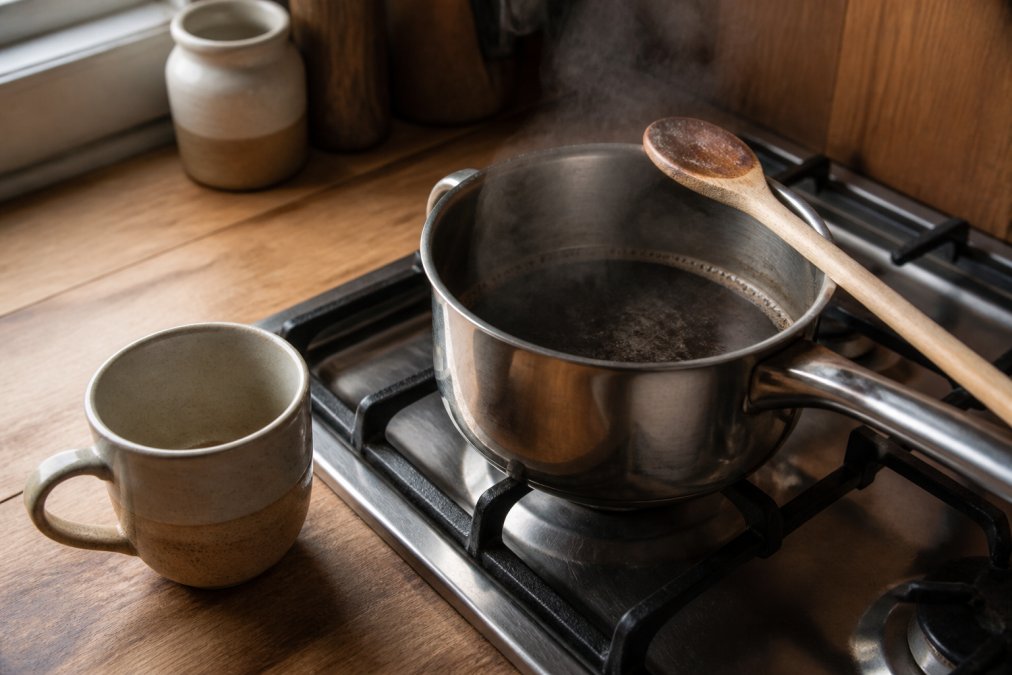
Step-by-Step: Saucepan Brewing
Total Time: 8 minutes Difficulty: Beginner
- Boil your water. Fill a pan with about 500ml of water and bring it to the boil.
- Let it cool for 30 seconds. Boiling water scalds coffee. Let it settle slightly.
- Add your coffee. Use roughly two tablespoons of ground coffee per mug.
- Stir gently. Give it one slow stir to mix.
- Wait four minutes. Leave it off the heat to steep.
- Tap the pan. Tap the side to help grounds sink.
- Pour slowly. Stop before the sludge reaches the spout.
Expected Result: A full-bodied cup with a little sediment at the bottom. Let the last sip go.
How to Filter Coffee Without a Paper Filter
You can filter coffee without a paper filter using a fine mesh sieve, a clean cotton cloth, or even a paper towel. Each option traps most of the grounds while letting the liquid through.
Here's how the common options compare:
| Filter Method | What It Catches | Best For | Reusable |
|---|---|---|---|
| Fine mesh sieve | Most coarse grounds | Quick pours | Yes |
| Cotton cloth | Nearly all grounds | Cleanest cup | Yes, if rinsed |
| Paper towel | Fine sediment | One-off brews | No |
| Muslin bag | Almost everything | Slow, rich brews | Yes |
A cloth filter gives the cleanest result. Rinse it first to remove any papery taste.
Mesh sieves let more silt through. That's fine if you like a heavier cup.
But paper towels tear easily. Fold them twice and place them in a sieve for support.
Coffee Grind Size for Immersion Brewing
Coffee grind size for immersion brewing should be coarse, roughly the texture of sea salt. Immersion methods steep coffee in water, so a coarse grind stops the brew turning bitter and muddy.
If your grind is too fine, you get sludge and a harsh aftertaste.
If it's too coarse, the water can't pull out enough flavour.
Here's a quick guide:
- Coarse: Sea salt texture, best for saucepan and jug brewing
- Medium: Sand texture, works for cloth-filtered brews
- Fine: Table salt texture, too fine for immersion
No grinder? Ask your roaster to grind for you. Kiboko Coffee Co offers four grind sizes plus whole bean, so you can order it ready for cafetière or filter brewing.
Steeping Time for Manual Coffee Brewing
Steeping time for manual coffee brewing should sit between three and five minutes. Under three minutes and the coffee tastes weak. Over five and it turns bitter and dry.
Start with four minutes. Then adjust.
If your cup tastes sour or thin, steep longer. If it tastes harsh or ashy, steep less.
Water temperature matters just as much. Aim for just off the boil. According to the Specialty Coffee Association's brewing standards, water between 92°C and 96°C extracts coffee best.
A simple trick: boil the kettle, then wait 30 to 45 seconds before pouring.
How to Brew Specialty Coffee Without Equipment: Common Mistakes to Avoid
The biggest mistake is using stale or pre-ground supermarket coffee. Freshness beats technique every time, and old beans taste dull no matter how careful you are.
Other common slips:
- Boiling the grounds. Heat above 96°C burns the coffee.
- Using too much coffee. Two tablespoons per mug is plenty.
- Steeping too long. Past five minutes, bitterness takes over.
- Skipping the rinse on cloth filters. It leaves a stale taste.
- Stirring too hard. Gentle stirring keeps sediment down.
A common mistake is blaming your method when the real problem is the bean. Fix the coffee first.
Choosing the Right Beans for Equipment-Free Brewing
Choosing the right beans for equipment-free brewing comes down to three things: freshness, roast level, and origin. Medium roasts work best because they're forgiving across simple methods.
Light roasts can taste sour without precise brewing. Dark roasts hide flaws but lose nuance.
For saucepan and cloth brewing, reach for balanced, sweet coffees. The Nyumba Blend is a good starting point, with pecan, toffee, and milk chocolate notes. It holds up well in a cafetière or filter.

If you want something brighter, try the Ethiopia Irgachefe. It brings jasmine, Earl Grey, and whisky notes that shine in a simple brew.
Prefer low acidity? The Brazil Cerrado delivers caramel, hazelnut, and dark chocolate with a smooth finish.
Buy whole bean if you can, and grind coarse just before brewing. If not, order ground for cafetière and skip the guesswork.
Every kilo sold also sends £1 to Farm Africa, so your morning cup does some good.
Making a proper cup without gear comes down to fresh beans, a coarse grind, and a little patience. Get those right and the method barely matters.
At Kiboko Coffee Co, we roast to order so your beans arrive fresh, rested, and ready to brew. Choose from four grind sizes, and most orders land next working day. With 315+ customer reviews and a Judge.me Diamond Transparent Shop medal behind us, we've helped plenty of home brewers make the switch from capsules.
Get started with Kiboko Coffee Co and brew a better cup with nothing but a pan and a mug.
Frequently Asked Questions
Can you make good coffee without a coffee maker?
Yes. A saucepan, a mug, and a fine mesh sieve are enough to brew specialty coffee without equipment. The key is using freshly roasted beans, the right grind size, and the correct steeping time. Kiboko Coffee Co's Nyumba Blend, for example, works well in a saucepan because its medium roast delivers pecan, toffee, and milk chocolate notes even with a basic immersion brew. Order before 12:00 for same-day dispatch.
What is the best method for brewing coffee without equipment?
The saucepan method, often called cowboy coffee, is the most reliable. Bring water to just below boiling, add coarsely ground coffee at roughly 60g per litre, stir, and steep for four minutes. Let the grounds settle, then pour through a fine sieve or cloth. This approach gives you full control over grind size for immersion brewing and steeping time for manual coffee brewing without needing a dedicated coffee maker.
How do you make cowboy coffee without grounds in the cup?
After steeping, tap the saucepan gently to help grounds settle. Wait one minute, then pour slowly through a fine mesh sieve, muslin cloth, or clean cotton towel. A small splash of cold water on the surface also speeds up settling. If you want to learn how to filter coffee without a paper filter, a reusable cloth or metal sieve works well and avoids the papery taste some filters add.
How do I ensure my coffee stays hot when brewing without a machine?
Preheat your mug with hot water before pouring, and brew in a saucepan with a lid to trap heat during steeping. Serve immediately after filtering. If you are brewing for two people, use a thermal flask rather than a second mug. Kiboko Coffee Co beans are roasted to order and rested before packing, so most UK orders arrive next working day, meaning your beans stay fresh and your brew stays hotter longer.