Table of Contents
- What Makes a Coffee Brand Truly Sustainable?
- The Best Ethically Sourced Coffee Beans UK Shoppers Can Buy
- How to Identify Sustainable Coffee Labels
- Direct Trade Coffee vs Fairtrade: What's the Difference?
- Sustainability Beyond the Bean: Packaging and Freshness
- Conclusion: Making a Sustainable Choice
- Frequently Asked Questions
Last Updated: September 27, 2026
What Makes a Coffee Brand Truly Sustainable?
Sustainable coffee brands are the ones that pay farmers fairly, protect the land the coffee grows on, and are honest about both. It's that simple, and that rare. This article examines what separates genuine ethical sourcing from marketing gloss.
Three things separate real sustainability from a nice logo. First, how the money flows: direct relationships with farms, published prices, or certified schemes with independent audits. Second, how the coffee is grown: shade trees, water use, soil health. Third, how it reaches you: packaging that can be recycled or composted, and roasting that doesn't waste what the farmer grew.
Coffee is one of the most traded agricultural commodities on earth, and the majority of growers are smallholders. That imbalance is why certification schemes exist in the first place. The Fairtrade Foundation's explanation of how Fairtrade works is a useful starting point for understanding what a label actually guarantees.
The Best Ethically Sourced Coffee Beans UK Shoppers Can Buy
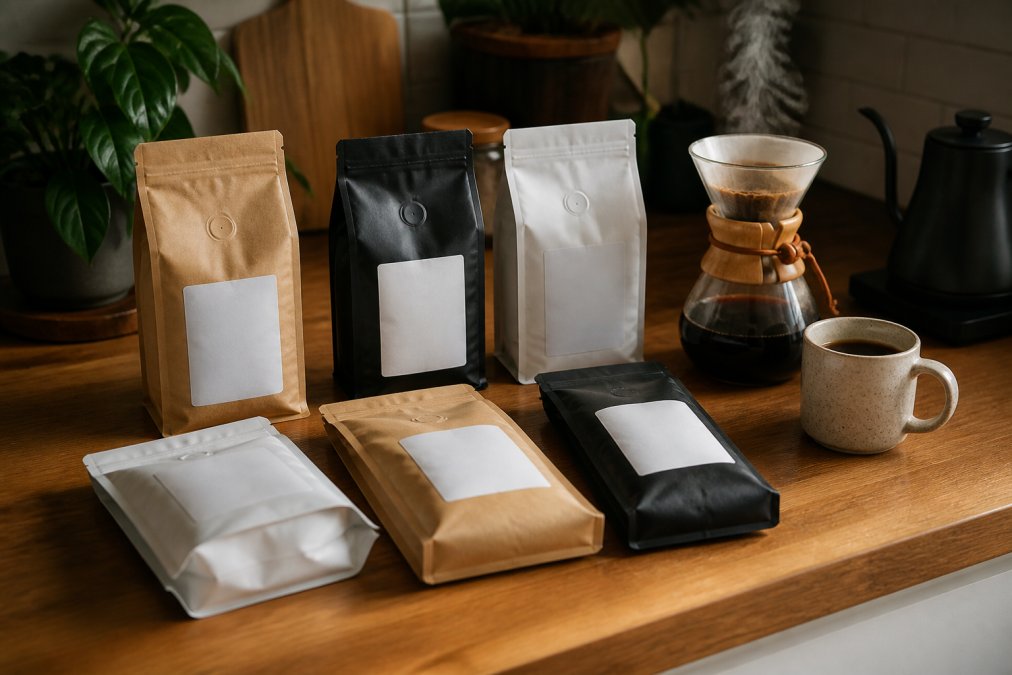
The best ethically sourced coffee beans UK shoppers can buy combine traceable origins, fresh roasting, and a transparent contribution to farming communities. Kiboko Coffee Co roasts to demand in small batches and donates £1 to Farm Africa for every kilo sold. All blends are available in 250g, 500g, and 1kg, with whole bean or four grind sizes.
| Blend | Roast Level | Tasting Notes | Best For | Price |
|---|---|---|---|---|
| Nyumba | Medium | Pecan, toffee, milk chocolate | Everyday espresso and flat whites | £10.99 |
| Usiku | Dark | Nougat, molasses, dark chocolate | Espresso and moka pot | £10.99 |
| Nyororo | Medium | Vanilla, blueberry, milk chocolate | Lattes and milk drinks | £10.99 |
| Shujaa | Dark | Caramel, dark chocolate, dates | Flat whites and frappés | £10.99 |
| Tamu | Medium | Milk chocolate, raisin, vanilla | Filter and pour-over | £10.99 |
Nyumba Blend: The Everyday House Coffee
Nyumba is the blend to start with if you're new to speciality coffee. Guatemala's Antigua Valley and Brazil's Cerrado give it depth and a chocolate-forward body, roasted medium for balance. It shines as espresso and holds its own in a flat white. If you're switching from capsules, this is the least risky first bag.

Usiku Blend: Bold Dark Roast for Espresso Lovers
Usiku means night, and it drinks like it. Heirloom Ethiopian beans meet Indian Catimor and Indonesian Typica for a deep, even dark roast with smoky molasses sweetness. Built for espresso machines and moka pots.
Nyororo Blend: Smooth and Velvety
Nyororo is the middle ground between Nyumba and Usiku, and it's the one I'd hand to anyone who drinks lattes. Brazilian, Costa Rican, and Indonesian Arabica, roasted medium, leaning into vanilla and blueberry. Customers describe it as feeling like a warm embrace, and that's not far off.
Shujaa Blend: Punchy and Full-Bodied
Shujaa is the warrior of the range: caramel up front, dark chocolate in the middle, a long date-fruit finish. Brazilian Mundo Novo brings body, El Salvador's Pacamara brings character, Indian Bourbon brings strength. Purpose-built for milk-based drinks.
Tamu Blend: Naturally Sweet and Low-Acidity
Tamu means sweet, and it earns the name without additives. Brazil's Sul de Minas and El Salvador's Finca Las Isabellas deliver milk chocolate, raisin, and vanilla with low acidity. Best as filter or pour-over, where the clean processing shows.
How to Identify Sustainable Coffee Labels
Identifying a sustainable coffee label means checking who audits it, what it guarantees, and whether the claim is verifiable. A logo alone proves nothing. Three checks do most of the work:
- Is the certifier independent? Fairtrade, Rainforest Alliance, and organic certification (via an approved UK body) all involve third-party inspection.
- Does the roaster name the farm or cooperative? Specificity is a good sign. Vague "ethically sourced" claims without a named origin are not.
- Is there a published contribution? Kiboko Coffee Co, for example, states plainly that £1 per kilo goes to Farm Africa.
The UK government guidance on food labelling and claims sets the baseline for what a business may legally claim on packaging, which is worth knowing when a label feels deliberately fuzzy.
Direct Trade Coffee vs Fairtrade: What's the Difference?
Direct trade coffee means a roaster buys straight from a farm or cooperative, often at a premium above commodity prices, with a relationship built over years. Fairtrade is a certification: a fixed minimum price plus a social premium, verified by an independent body. Direct trade offers flexibility and traceability; Fairtrade offers a guaranteed floor and third-party proof.
The honest answer is that neither is automatically better. Direct trade depends entirely on the roaster's integrity, since there's no external auditor. Fairtrade guarantees a baseline but can be slower to reward exceptional quality. Many good roasters use both, and some use neither while still paying well above market rates.
What matters is that you can find out. The Fairtrade International's standards documentation shows exactly what the certification covers, so you can compare it against a roaster's own claims.
Sustainability Beyond the Bean: Packaging and Freshness
Packaging and freshness are where sustainability claims often quietly fall apart. A perfectly sourced bean shipped in unrecyclable plastic, or left in a warehouse for months, undoes much of the good. Freshness and sustainability are linked: coffee roasted to demand means less waste and a better cup.
Roasting throughout the week rather than stockpiling is the practical version of this. So is keeping what you buy in good condition. A simple stainless steel clip keeps the bag sealed against air and moisture, and a reusable cup cuts the disposable cycle entirely. Kiboko Coffee Co's own clip costs £4.99, and the 8oz Circular travel mug, made from at least 90% recycled stainless steel and fully recyclable, is £23.95.

Where a brand falls short on packaging, it's worth saying so. Recyclable bags are better than mixed-material ones, but neither beats buying the right amount and drinking it fresh.
Conclusion: Making a Sustainable Choice
The hardest part of buying from sustainable coffee brands isn't finding them. It's trusting the claim. Too many brands wave a certification logo and hope you don't read the fine print.
Kiboko Coffee Co offers traceable origins across Guatemala, Brazil, Ethiopia, El Salvador, Costa Rica, India, and Indonesia, small-batch roasting to demand, and donates £1 from every kilo to Farm Africa. Custom grind options, whole bean availability, and next-working-day delivery for most orders are also provided.
Get started with Kiboko Coffee Co and make your next bag one you can actually trace.
Frequently Asked Questions
What makes a coffee brand truly sustainable in the UK?
A truly sustainable coffee brand goes beyond a single certification. Look for transparent sourcing policies, fair prices paid to farmers, environmental practices like shade-grown or organic farming, and a commitment to reducing packaging waste. Brands that publish impact reports or donate a portion of sales to community projects, such as Kiboko Coffee Co's £1 per kilo to Farm Africa, demonstrate a deeper level of accountability. Sustainability also includes freshness and ethical labour practices throughout the supply chain.
How can I tell if my coffee beans are ethically sourced?
Start by checking the packaging for certification logos like Fairtrade, Rainforest Alliance, or Organic. But also look for the brand's own transparency: do they name the farms or cooperatives? Do they explain how much farmers are paid? Kiboko Coffee Co, for example, states that every kilo sold contributes £1 to projects in coffee-growing Africa. If a brand is vague about its sourcing, that's a red flag. You can also visit the brand's website for detailed sourcing stories.
What is the difference between direct trade and Fairtrade coffee?
Fairtrade is a third-party certification that sets minimum prices and standards for cooperatives, ensuring a safety net for farmers. Direct trade means the roaster buys directly from farmers or cooperatives, often paying a premium above Fairtrade prices and building long-term relationships. Direct trade can offer more transparency and higher quality incentives, but it lacks the formal oversight of Fairtrade. Many speciality roasters use a mix of both models. Look for brands that clearly explain their approach.
Which sustainable coffee brands in the UK offer the best eco-friendly packaging?
Eco-friendly packaging can include recyclable, compostable, or reusable materials. Some brands use bags made from kraft paper with a compostable liner, while others offer refill options or incentives for returning packaging. Kiboko Coffee Co's bags are recyclable, and they also sell a stainless steel coffee clip (£4.99) to keep beans fresh, reducing waste. When evaluating packaging, check if the materials are widely recyclable in the UK and whether the brand minimises plastic use.
Is speciality coffee inherently more sustainable than supermarket brands?
Not automatically, but speciality coffee often has advantages. Speciality roasters tend to buy higher-quality beans, which commands better prices for farmers and encourages sustainable farming practices. They also roast in smaller batches, reducing waste and energy use. However, sustainability depends on the brand's specific practices. Some supermarket brands are now offering certified sustainable lines. Always look for transparency and certifications rather than assuming speciality equals sustainable. Kiboko Coffee Co, for instance, roasts to demand, which minimises waste and ensures freshness.