Table of Contents
- Why Verifying Ethical Coffee Sourcing Matters
- Check for Recognised Certifications
- Fairtrade vs Direct Trade Coffee: What's the Difference?
- Investigate Supply Chain Transparency
- How to Identify Greenwashing in Coffee
- Best Ethically Sourced Coffee Beans: What to Look For
- Practical Steps to Verify Before You Buy
- Frequently Asked Questions
Last Updated: September 19, 2026
Why Verifying Ethical Coffee Sourcing Matters
When you buy coffee, you're making a choice about more than just flavour. You're deciding whether your morning cup supports fair wages, sustainable farming, or environmental damage. The problem is that "ethical" and "sustainable" mean different things to different producers, and some use these words without backing them up.
Verifying ethical coffee sourcing protects both farmers and your own conscience. It's the difference between genuinely supporting sustainable farming and paying premium prices for greenwashing. At Kiboko Coffee Co, we believe transparency matters. That's why understanding how to verify ethical coffee sourcing is essential before you buy.
The coffee industry has real issues. Farmers in developing countries often earn less than the cost of production. Rainforests disappear for coffee plantations. Pesticides harm soil and water. But when you know how to verify ethical coffee sourcing, you can actually make a difference with your purchases.
Check for Recognised Certifications
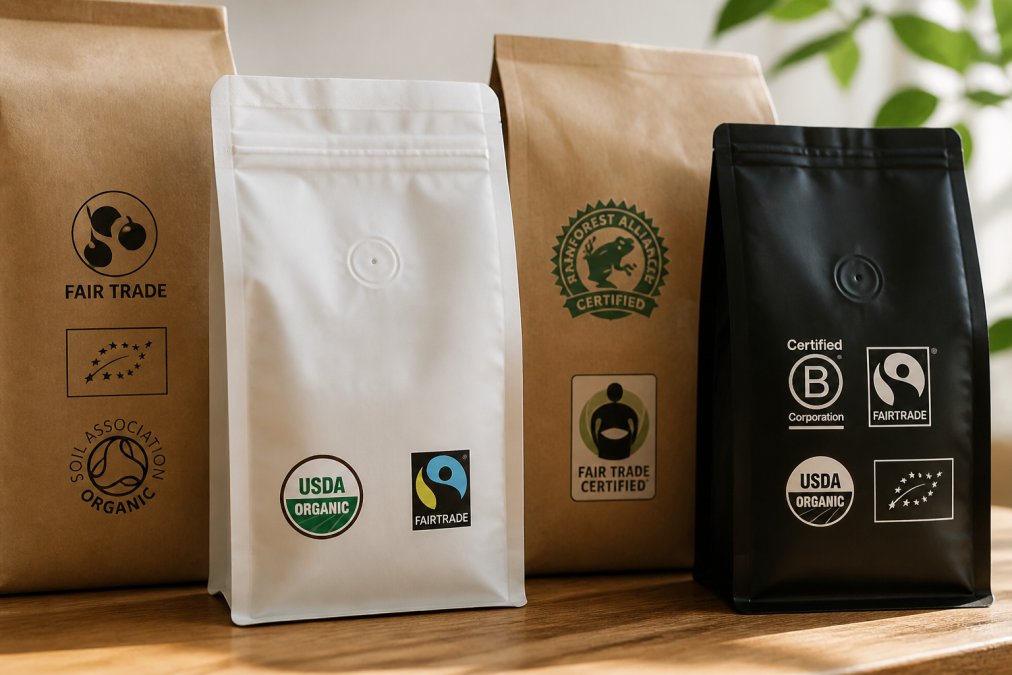
Certifications are your first checkpoint when you want to verify ethical coffee sourcing. They're independent audits that prove a coffee meets specific standards. Not all certifications are equal, though, some require real change, whilst others are easier to obtain.
Look for these established certifications:
- Fairtrade, Ensures farmers receive a minimum price and work in safe conditions
- Rainforest Alliance, Focuses on environmental protection and worker welfare
- UTZ Certified, Emphasises sustainable farming and traceability
- Fair Trade USA, Similar to Fairtrade but operates in the United States and some other regions
- Organic Certification, Confirms the coffee was grown without synthetic pesticides or fertilisers
The strongest certifications require annual audits and ongoing compliance. Weaker ones might be one-time certifications. When you verify ethical coffee sourcing through certifications, check when the certificate was issued and whether it's current.
A common mistake is assuming any certification is good enough. Some certifications cost producers very little to obtain. Others require significant investment in changing farming practices. The ones that cost more to earn usually mean more real change on the ground.
Fairtrade vs Direct Trade Coffee: What's the Difference?
These two approaches to ethical sourcing look similar but work differently. Understanding the distinction helps you verify ethical coffee sourcing more effectively.
Fairtrade is a certification system. It sets minimum prices that farmers must receive. If market prices drop below the minimum, Fairtrade guarantees the higher price. It also requires certified producers to meet environmental and labour standards. Fairtrade is audited by third parties, so you know the standards are enforced.
Direct Trade is a relationship, not a certification. A roaster buys directly from a specific farm or farmer, cutting out middlemen. The roaster typically pays above-market prices based on quality. There's no third-party audit, so you're trusting the roaster's word that they're paying fairly.
Direct Trade can mean better prices for farmers because there's no middleman taking a cut. But it relies on the roaster's integrity. Fairtrade is more transparent because independent auditors verify the claims. Both can be ethical, they just work in different ways.
When you verify ethical coffee sourcing, ask which approach the roaster uses. Some use both. Kiboko Coffee Co sources ethically, ensuring transparency at every step.
Investigate Supply Chain Transparency
Real transparency means you can trace your coffee from the cup back to the farm. This is harder than it sounds, because coffee passes through many hands before it reaches you.
Start by checking what information the roaster provides:
- The specific farm or region where beans were grown
- The farmer's name or cooperative name
- The altitude and harvest date
- Details about processing methods
- Pricing information or what the farmer was paid
Good roasters publish this information on their website or on the bag itself. They know customers want to verify ethical coffee sourcing, so they make it easy. If a roaster can't tell you where their coffee comes from, that's a red flag.
Ask questions directly. Email the roaster and ask about a specific bean. How much did they pay the farmer? Is the farmer part of a cooperative? What certifications do they hold? Honest roasters answer these questions quickly. Evasive answers suggest they're hiding something.
Visit the roaster's website and look for their sourcing philosophy. Do they explain their relationships with farmers? Do they share photos or stories from origin? These details show genuine commitment to transparency.
How to Identify Greenwashing in Coffee
Greenwashing is when a company uses environmental or ethical language without real substance behind it. In coffee, it's common. A bag might say "ethically sourced" with no certification or proof. That's greenwashing.
Watch for these warning signs:
- Vague language, Words like "sustainable" or "fair trade" without certification backing them up
- No origin information, The bag doesn't say where the coffee came from
- Premium price with no explanation, The coffee costs more but the roaster can't explain why
- Green packaging alone, Recyclable packaging doesn't mean ethical sourcing
- Unverified claims, The roaster makes promises but has no third-party audit
Real ethical sourcing requires specificity. A roaster should tell you the farm name, the farmer's name, the altitude, and how much the farmer was paid. If they won't share these details, they're probably greenwashing.
Compare what roasters claim against what they can prove. Certification logos are proof. Specific farm names are proof. Pricing transparency is proof. Vague promises are not.
Best Ethically Sourced Coffee Beans: What to Look For
When you're shopping for ethically sourced coffee beans, use this checklist to verify ethical coffee sourcing before you buy:
Origin and traceability, You should know the country, region, and ideally the specific farm. Single-origin beans are easier to trace than blends.
Certification, Look for Fairtrade, Rainforest Alliance, or UTZ logos on the bag. Check the certification number on the roaster's website to confirm it's current.
Harvest date, Coffee loses flavour after a few months. Look for beans roasted within the last 4 weeks. Fresh beans also mean you're supporting recent farmer income.
Roaster transparency, Can you find information about the roaster's sourcing practices? Do they publish what they paid farmers? Transparency is a sign of genuine ethics.
Tasting notes and processing method, Ethical roasters invest in quality. They describe the flavour profile and explain how the beans were processed. This detail shows they care about the product.
Price point, Ethically sourced coffee costs more. If the price seems too low compared to other speciality coffees, be sceptical.
Kiboko Coffee Co publishes the farm details on every bag and donates £1 to Farm Africa for every kilogram sold. This combination of transparency and direct support shows genuine commitment to ethical sourcing.
Practical Steps to Verify Before You Buy
Here's how to verify ethical coffee sourcing in five practical steps:
Step 1: Check the bag, Read the label before you buy. Look for origin information, roast date, and certification logos. If the bag is vague, move on.
Step 2: Visit the roaster's website, Find their sourcing philosophy page. Do they explain where their coffee comes from? Can you find specific farm names and details?
Step 3: Look up the certification, If the bag shows a certification logo, visit the certifier's website. Search for the roaster's name or the specific product. Genuine certifications are publicly verifiable.
Step 4: Email the roaster, Ask specific questions: Where exactly did this coffee come from? How much did the farmer receive? What certifications do they hold? Response time and detail level tell you a lot.
Step 5: Check for third-party reviews, Look at customer reviews and industry publications.
| Verification Method | What It Shows | Best For |
|---|---|---|
| Certification logos | Third-party audited standards | Quick initial check |
| Farm name and location | Traceability and specificity | Identifying single-origin beans |
| Roaster transparency | Sourcing philosophy and practices | Understanding the roaster's values |
| Farmer payment details | Fair wages and direct support | Verifying genuine fairness |
| Harvest and roast dates | Freshness and recent farmer income | Ensuring quality and current support |
When you verify ethical coffee sourcing through recognised certifications, you're supporting real change. According to Fairtrade International's impact reports, certified farmers receive higher incomes and invest in sustainable practices. Direct Trade relationships, documented by the Direct Trade Coffee Alliance, often result in even higher farmer payments because the roaster eliminates middlemen.
Frequently Asked Questions
What are the most reliable ethical coffee certifications?
The most trusted certifications include Fairtrade, Rainforest Alliance, UTZ Certified, and Fair Trade USA. In the UK market, Fairtrade certification is widely recognised and verified by independent auditors. Direct Trade relationships, whilst less formal, offer traceability when roasters work directly with specific farms. Look for certifications that include third-party verification rather than self-declared claims. Kiboko Coffee Co sources beans with transparent certification credentials, allowing you to verify ethical practices before purchase.
How can I tell if a coffee brand is truly transparent about its supply chain?
Genuine transparency includes specific farm names, regions, and harvest dates on packaging or the roaster's website. Reputable brands provide tasting notes linked to origin characteristics, explain their sourcing relationships, and share information about farmer payments or partnerships. Request details if they're not readily available, ethical roasters welcome questions. Brands that use vague terms like 'ethically sourced' without specifics often lack real verification. Check whether the roaster publishes sourcing stories, farmer profiles, or supply chain documentation.
What's the difference between Fairtrade and Direct Trade coffee?
Fairtrade certification guarantees minimum prices and working conditions through third-party auditing and formal standards set by international bodies. Direct Trade involves roasters buying directly from farmers at negotiated prices, often higher than Fairtrade minimums, but without formal certification oversight. Fairtrade offers standardised protection across many farms; Direct Trade builds relationships with fewer, specific producers. Both approaches aim to improve farmer livelihoods, but through different mechanisms. Your choice depends on whether you prioritise formal certification assurance or direct roaster-farmer relationships.
How do I spot greenwashing in coffee marketing?
Greenwashing uses vague language like 'sustainably grown' or 'ethically sourced' without certifications, specifics, or third-party verification. Watch for brands that emphasise environmental messaging but lack supply chain details, farmer information, or certification badges. Red flags include no mention of prices paid to farmers, absence of origin details, or claims that seem too good to be true. Genuine ethical roasters provide verifiable proof: certification numbers, farm names, payment transparency, and audited practices. If a brand can't answer direct questions about sourcing, that's a warning sign.