Table of Contents
- Freshly Roasted Coffee Beans Delivered UK: What to Look For
- Compare Our Freshly Roasted Coffee Beans at a Glance
- 1. Nyumba Blend: The Everyday House Cup
- 2. Kenya Nyeri AA: A Bright Single Origin for Filter Brews
- 3. Usiku Blend: Bold Dark Roast for Espresso Lovers
- 4. Nyororo Blend: Smooth and Velvety for Milk Drinks
- Coffee Bean Roast Dates Explained: Why Freshness Matters
- How to Store Coffee Beans for Maximum Freshness
- Frequently Asked Questions
Last Updated: September 7, 2026
Freshly Roasted Coffee Beans Delivered UK: What to Look For
Most supermarket coffee has already lost its peak flavour by the time it reaches the shelf, which is why freshly roasted coffee beans delivered UK services have become the standard for anyone serious about their morning cup. The difference comes down to roast dates, not just branding. At Kiboko Coffee Co, we roast in small batches throughout the week and dispatch most UK orders the next working day, so beans arrive at their aromatic peak rather than weeks after leaving the roaster.
Freshly roasted coffee beans are coffee that has been roasted within the past two to four weeks and allowed a proper rest period before brewing. When you buy beans roasted to demand, you get the full expression of the origin's character: bright acidity in single origins, deep chocolate notes in blends, and a crema on espresso that stale beans simply cannot produce. The key indicators to check are the roast date on the bag, the roaster's dispatch schedule, and whether the beans were rested before packing.
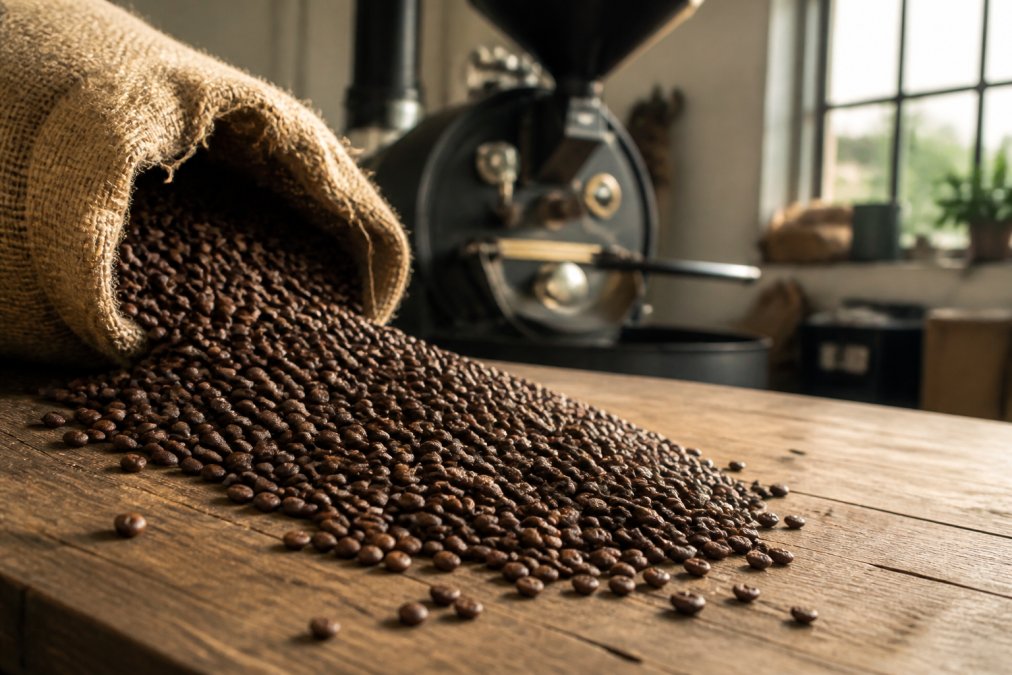
What most guides miss is that freshness is a balance. Beans need a few days to degas after roasting, but they start losing volatile aromatics after roughly three to four weeks (peer-reviewed research). A roaster that ships immediately after roasting is doing you no favours either. The sweet spot is beans rested for three to seven days before they reach your grinder. This is why ordering from a roaster who controls the entire timeline matters more than picking the cheapest bag online.
Compare Our Freshly Roasted Coffee Beans at a Glance
The quickest way to find your match is to think about how you brew and what you drink. Milk-based drinks need body; black coffee needs clarity; espresso needs a roast that builds crema. Here is how our core range maps to those needs.
| Coffee | Roast Level | Tasting Notes | Best For | Price |
|---|---|---|---|---|
| Nyumba Blend | Medium | Pecan, Toffee, Milk Chocolate | Everyday drinking, new to specialty | £10.99 |
| Kenya Nyeri AA | Medium | Blackcurrant, Vanilla, Cocoa | Filter, pour-over, bright cups | £10.99 |
| Usiku Blend | Dark | Nougat, Molasses, Dark Chocolate | Espresso, moka pot, bold cups | £10.99 |
| Nyororo Blend | Medium | Vanilla, Blueberry, Milk Chocolate | Lattes, café au laits, milk drinks | £10.99 |
Each bag is available whole bean or in four grind sizes, so you can match the grind to your brewer without owning a grinder. Every kilo sold also contributes £1 to Farm Africa, which supports farming communities across coffee-growing regions of Africa.

1. Nyumba Blend: The Everyday House Cup
Our top pick for most people is the Nyumba Blend, the house cup we drink ourselves. It is built for the moments when you want coffee that simply works: smooth enough to drink black, rich enough to hold its own against milk, and consistent from the first cup of the morning to the last shot of the afternoon. If you are new to specialty coffee, this is where to start.
The beans come from Central and South America, with origins chosen to give Nyumba its signature body. Roasted to a balanced medium, it delivers pecan, toffee, and a clean milk chocolate finish.
Speciality Coffee Association brewing guides recommend starting with a balanced house blend when transitioning from capsules, because it gives you a forgiving baseline while you dial in your technique. Nyumba excels as an espresso with caramel sweetness and beautiful crema, and it is equally at home in a flat white or Americano. For filter brewing or French press, the ground-for-cafetière option delivers a clean, chocolate-rich cup.
2. Kenya Nyeri AA: A Bright Single Origin for Filter Brews
If you want to taste what specialty coffee can actually do, the Kenya Nyeri AA is the single origin to try. Kenyan coffee is celebrated worldwide, and this AA grade represents the country's largest and finest beans, selected for superior size and flavour potential. It offers a decadently smooth drinking experience with blackcurrant, vanilla, and cocoa notes that make it instantly recognisable.

The beans come from the fertile volcanic slopes of Mount Kenya and the Aberdare Range. High altitudes slow the cherry's maturation, concentrating sugars and developing remarkable depth. The fully washed process includes multiple fermentation stages and sun-drying.
This is one of the best filter coffees we offer. The clarity and complexity shine through pour-over and AeroPress, where the bright blackcurrant acidity has room to express itself. It also works beautifully as a single origin espresso if you want to explore what Kenyan character tastes like without milk.
3. Usiku Blend: Bold Dark Roast for Espresso Lovers
Dark roast lovers who do not compromise should reach for the Usiku Blend. Three origins, three continents, one purpose: to deliver an unapologetically bold, full-bodied cup that holds its character through milk, syrup, or whatever else you throw at it. This is the coffee you choose when you want your espresso to taste like coffee.

Usiku brings together beans from three continents. Each origin contributes something distinct, and the batch is developed to a deep, even dark roast that pulls out smoky molasses sweetness without crossing into burnt territory. Expect nougat, molasses, and dark chocolate.
Built for espresso machines and moka pots, the high temperature pulls out Usiku's chocolate-and-molasses richness perfectly. It also excels in a French press for a thick, full-bodied morning cup. The one honest limitation: if you prefer light, tea-like filter coffees, this dark roast is not aimed at you.
4. Nyororo Blend: Smooth and Velvety for Milk Drinks
If Nyumba is the everyday house blend and Usiku is the dark roast, Nyororo is the velvety in-between. The name says it all: smooth. This is the blend our customers describe as feeling like a warm embrace, the cup you reach for when you want something rich and luxurious without the intensity of a dark roast.
Nyororo brings together Arabica from three continents, roasted to a balanced medium. It leans into vanilla, blueberry, and milk chocolate, surprising notes for a blend and a sign of how carefully the origins were chosen.
The velvety body is built for milk. It excels as a latte or café au lait, and pulls a beautifully creamy espresso for those who like their shot smooth rather than punchy. For anyone moving from capsule machines to fresh beans, this is often the easiest transition because the mouthfeel feels familiar while the flavour quality jumps noticeably.
Coffee Bean Roast Dates Explained: Why Freshness Matters
A roast date is the single most important piece of information on any bag of specialty coffee. It tells you when the beans were roasted, which lets you calculate how long they have been off the roaster. Coffee is a fresh product, not a storecupboard staple, and its flavours degrade steadily after roasting.
The timeline works like this. Roasted beans release carbon dioxide for several days after roasting, which is why they need to rest before brewing. After roughly day three, the beans hit their optimal flavour window. From around week three or four, volatile aromatic compounds begin to fade noticeably. By week six, most of the delicate top notes are gone, leaving a flat, one-dimensional cup.
The UK Coffee Association's guide to coffee freshness explains that proper storage and attention to roast dates are essential for preserving quality at home. This is why buying from a roaster who prints roast dates and roasts to demand matters. If a bag only shows a best-before date that is months away, you have no way of knowing how long those beans have been sitting in a warehouse.
How to Store Coffee Beans for Maximum Freshness
How to store coffee beans for maximum freshness comes down to four rules: keep them whole, keep them cool, keep them dry, and keep them away from air. Whole beans stay fresh far longer than ground coffee because grinding exposes vastly more surface area to oxygen, accelerating staleness.
Store beans in an airtight container in a cool, dark cupboard, away from direct sunlight, heat sources, and moisture. Do not refrigerate or freeze beans you are actively using, as temperature fluctuations cause condensation that degrades flavour. Only freeze beans you need to store long-term, and grind them from frozen without thawing.
For everyday use, the original bag with a one-way valve works well, provided you seal it properly after each use. Adding a stainless steel coffee clip creates an airtight seal that locks out air and moisture while keeping your beans fresher for longer. Grind only what you need immediately before brewing, and you will taste the difference between week one and week four.
Choosing freshly roasted coffee beans delivered UK services comes down to one question: how much do you value flavour? Supermarket bags cannot compete with beans roasted to demand and rested properly before dispatch. At Kiboko Coffee Co, every order is roasted in small batches throughout the week, offered whole bean or in four grind sizes, and shipped fast across the UK, with £1 from every kilo supporting Farm Africa. Whether you want the balanced Nyumba Blend for daily drinking or the bright character of Kenya Nyeri AA for filter brews, the difference is in the roast date. Shop now and taste what fresh actually means.
Frequently Asked Questions
How can I tell if coffee beans are freshly roasted?
Check the roast date on the bag, not just a best-before date. Freshly roasted coffee beans are at their peak between 4 and 14 days after roasting, so look for a roast date within the last two weeks. The beans should look oily for dark roasts and smell aromatic rather than flat. At Kiboko Coffee Co, we roast throughout the week and dispatch most orders the next working day, so your beans arrive within days of leaving the roaster.
Is it worth buying coffee beans online instead of the supermarket?
Yes, for two reasons: freshness and traceability. Supermarket beans often sit in warehouses for months before reaching the shelf, and the roast date is rarely listed. Buying freshly roasted coffee beans delivered from a UK roaster means they arrive days after roasting, when flavour is at its peak. You also get transparent sourcing. Every kilo of Kiboko coffee contributes £1 to Farm Africa, and our single origins are traceable to specific farms and cooperatives.
How long do freshly roasted coffee beans stay fresh?
Coffee beans stay at their best for roughly 4 to 6 weeks after roasting, provided they are stored correctly. The first 2 weeks deliver the most vibrant flavours, while days 14 to 30 still produce an excellent cup. After that, beans slowly lose their aromatic oils. To extend freshness, keep beans in an airtight container away from light, heat and moisture. Our stainless steel coffee clip helps seal the bag tightly between brews.
What is the difference between single origin and blended coffee beans?
Single origin beans come from one farm, cooperative or region, so they showcase a specific terroir. For example, our Kenya Nyeri AA offers blackcurrant and vanilla notes unique to its high-altitude volcanic slopes. Blends combine beans from multiple origins to create a consistent, balanced flavour. Our Nyumba house blend pairs Guatemalan depth with Brazilian sweetness for an everyday cup that works with or without milk. Choose single origin to explore, blends for reliability.
Do coffee subscription services save money in the long run?
They can, but the real value is convenience and consistency. Subscribing to freshly roasted coffee beans delivered on a regular schedule removes the temptation to buy expensive supermarket capsules or café coffees, which adds up quickly. A 500g bag at £10.99 from Kiboko yields roughly 30 to 40 cups, depending on your brew method. Subscriptions also guarantee you never run out, and you can pause or adjust delivery to match your consumption.